Best Ethereum Wallets in 2026: Top ETH Wallets Compared

The best Ethereum wallet depends on how you use ETH — from simple holding and staking to DeFi, Layer 2 networks, NFTs, and hardware-secured storage.
Ethereum wallets now do much more than manage ETH and ERC-20 tokens. They also connect to dApps, move assets across networks such as Base and Arbitrum, sign smart-contract interactions, and increasingly support smart-account features.
That makes signing security, L2 support, recovery, and dApp compatibility just as important as basic asset storage.
Best Ethereum Wallets in 2026: Quick Comparison
The top Ethereum wallets serve different needs, with Atomic Wallet covering broader asset management, MetaMask and Rabby going deeper into onchain activity, and Ledger Flex prioritizing hardware security.
The choice becomes simpler once the use case is clear: MetaMask and Rabby fit more active Ethereum users, Ledger Flex suits larger long-term holdings, while Atomic Wallet, Trust Wallet, and Rainbow offer different balances of asset management, mobile access, and Ethereum ecosystem depth.
How We Chose the Best Ethereum Wallets
We focused on how well each wallet handles Ethereum itself — including Layer 2s, ERC-20 tokens, dApps, transaction signing, recovery, and long-term key security.
The main criteria were:
- Ethereum and L2 support — Mainnet plus practical access to networks such as Base, Arbitrum, and Optimism
- Signing security — Transaction previews, simulation, approval visibility, and risk warnings
- dApp access — Compatibility with DeFi, NFT platforms, and other Ethereum apps
- Self-custody — Who controls the private keys and recovery credentials
- ERC-20 support — How easily the wallet handles Ethereum-based tokens
- Recovery and hardware support — Options for restoring access and isolating private keys
- Staking — Whether ETH staking or liquid staking is available and how it works in practice
- Product maturity — Active development, documentation, and security track record
We did not rank wallets by raw token count. For Ethereum users, strong L2 handling and clear transaction signing are often more useful than support for hundreds of unrelated assets.
Atomic Wallet — Best All-in-One Ethereum Wallet
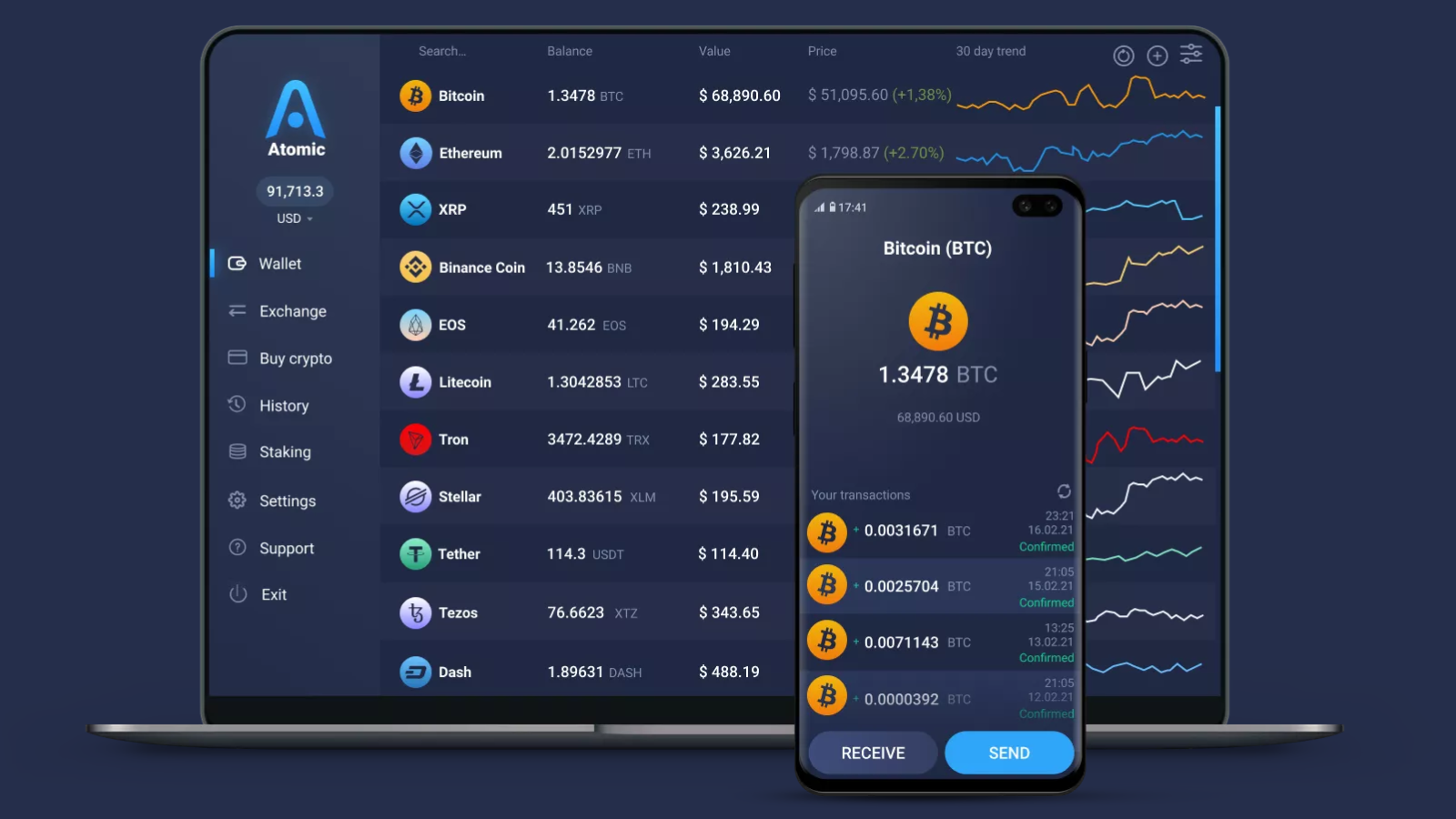
Atomic Wallet is a practical Ethereum wallet for users who want ETH, ERC-20 tokens, swaps, staking, and a wider crypto portfolio under one self-custody setup.
Private keys are encrypted locally and remain under the user’s control. Atomic supports custom ERC-20 tokens, built-in swaps, and a separate Web3 extension for connecting to Ethereum and other EVM dApps.
ETH staking is available through Lido rather than direct validator staking. Deposited ETH is converted to stETH, with rewards added to the stETH position over time; Lido currently takes 10% of staking rewards as a protocol fee.
Atomic is available on desktop and Android. Its iOS app is currently unavailable for new downloads from the App Store, although previously installed versions remain active.
Best for: ETH users who also manage a broader multichain portfolio
Main trade-off: Less specialized for advanced Ethereum DeFi and transaction analysis than MetaMask or Rabby
MetaMask — Best for Ethereum and dApp Access
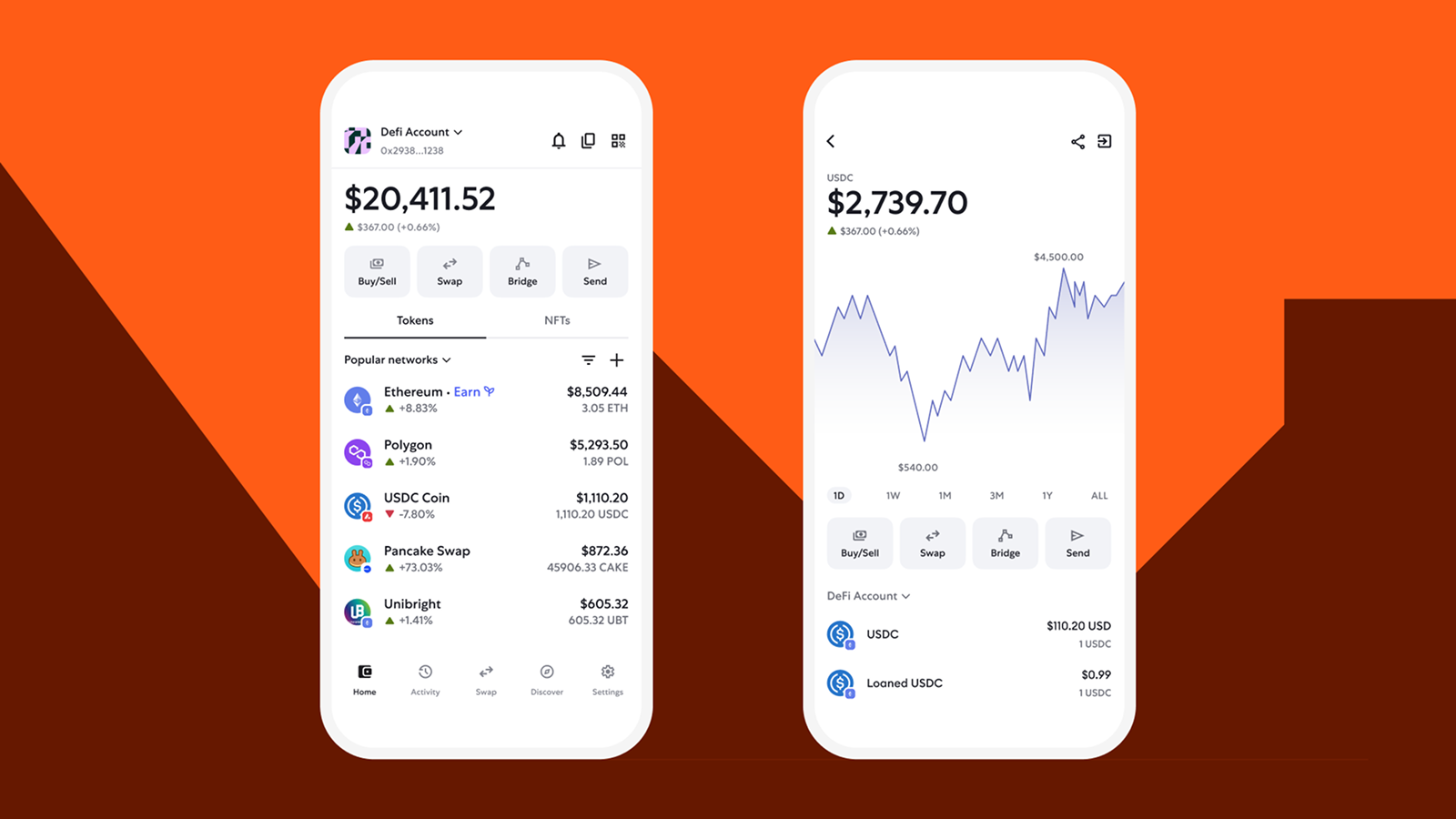
MetaMask is one of the strongest Ethereum wallets for users who regularly connect to dApps, move across Layer 2s, and interact with DeFi.
Its biggest advantage is compatibility. MetaMask works across Ethereum and major EVM networks, integrates with a broad range of dApps, and supports hardware wallets for users who want to keep keys offline while still using Web3.
MetaMask has also moved beyond the traditional wallet model with smart-account features and advanced permissions, giving supported apps more flexible ways to request limited access instead of relying only on open-ended approvals.
Best for: Ethereum dApps, DeFi, and Layer 2 activity
Main trade-off: The growing feature set can feel complex for users who only want to hold and send ETH
Rabby — Best Ethereum Wallet for DeFi
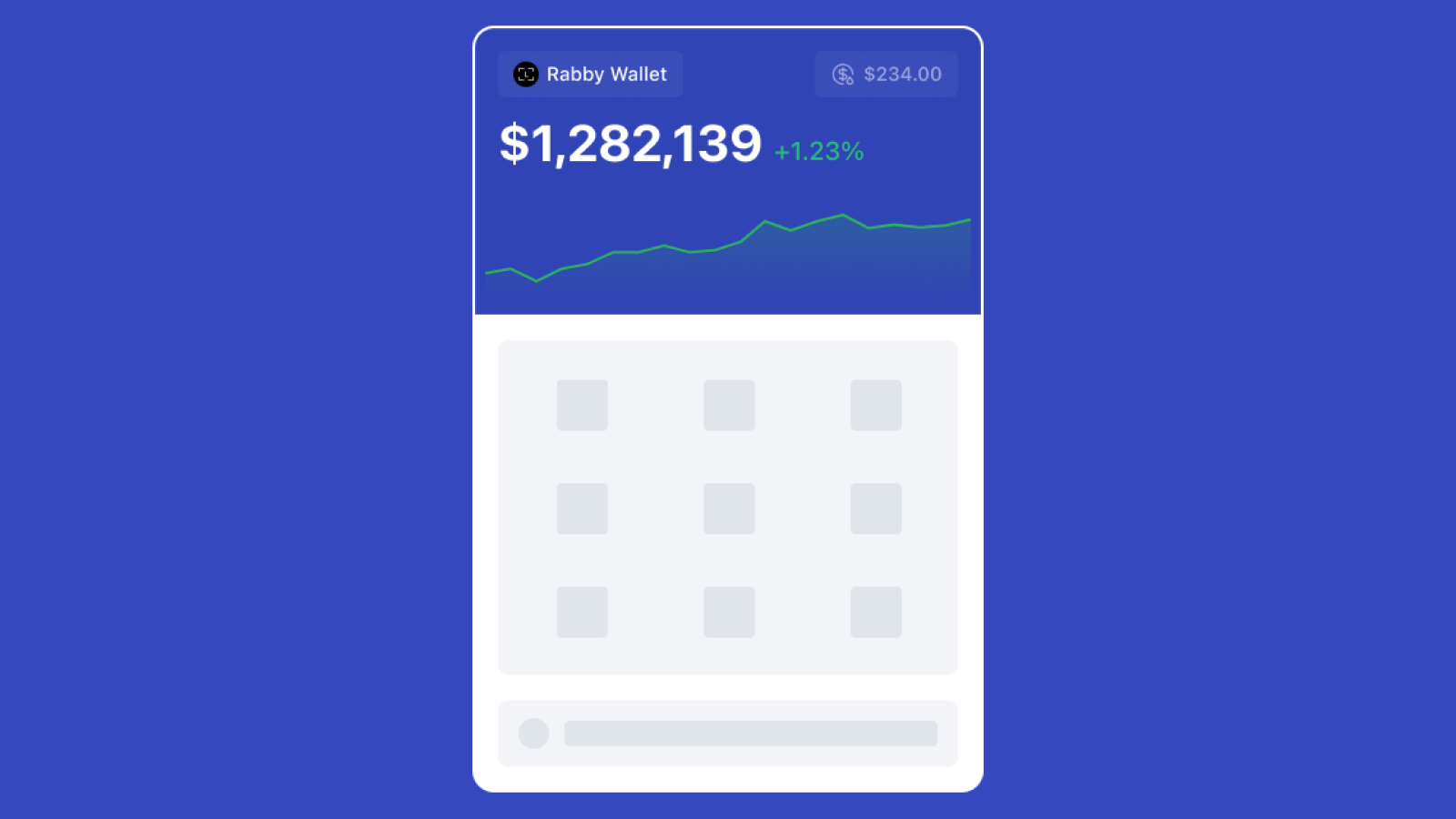
Rabby is built for active Ethereum and EVM users who want to see more clearly what a transaction will do before signing it.
It simulates transactions before approval, previews expected balance changes, and runs risk checks on contracts and addresses. That makes it particularly useful for DeFi, where a single interaction can involve token approvals, swaps, liquidity positions, or multiple contract calls.
Rabby also handles EVM network switching automatically in many dApps, reducing the friction of moving between Ethereum and compatible Layer 2 networks.
Best for: Active DeFi users who prioritize transaction visibility
Main trade-off: Its strengths are concentrated around Ethereum and EVM ecosystems rather than broader native multichain use
Ledger Flex — Best Hardware Wallet for Ethereum
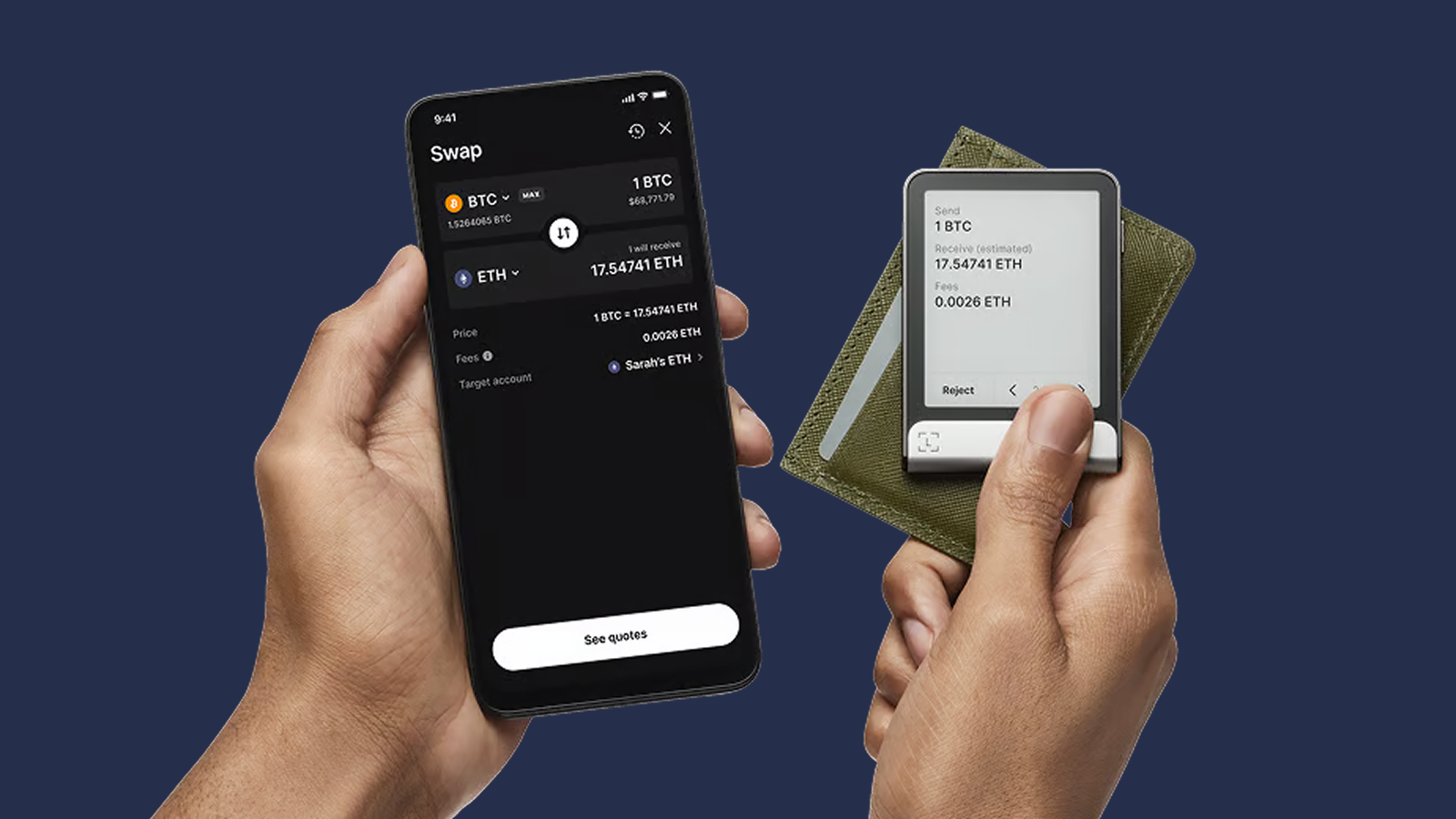
Ledger Flex is a strong choice for users who want to keep Ethereum private keys offline while still using ETH, ERC-20 tokens, and compatible dApps.
Transactions are reviewed and approved on the Ledger device, reducing reliance on the computer or phone used to access Web3. Ledger can also pair with software wallets such as MetaMask and Rabby, so users can keep hardware-secured keys while accessing Ethereum DeFi and Layer 2s. (ledger.com)
This setup works especially well for larger balances that do not need software-only convenience.
Best for: Long-term ETH storage and hardware-secured Web3 activity
Main trade-off: Frequent transactions require an extra physical approval step
Trust Wallet — Best Mobile Ethereum Wallet
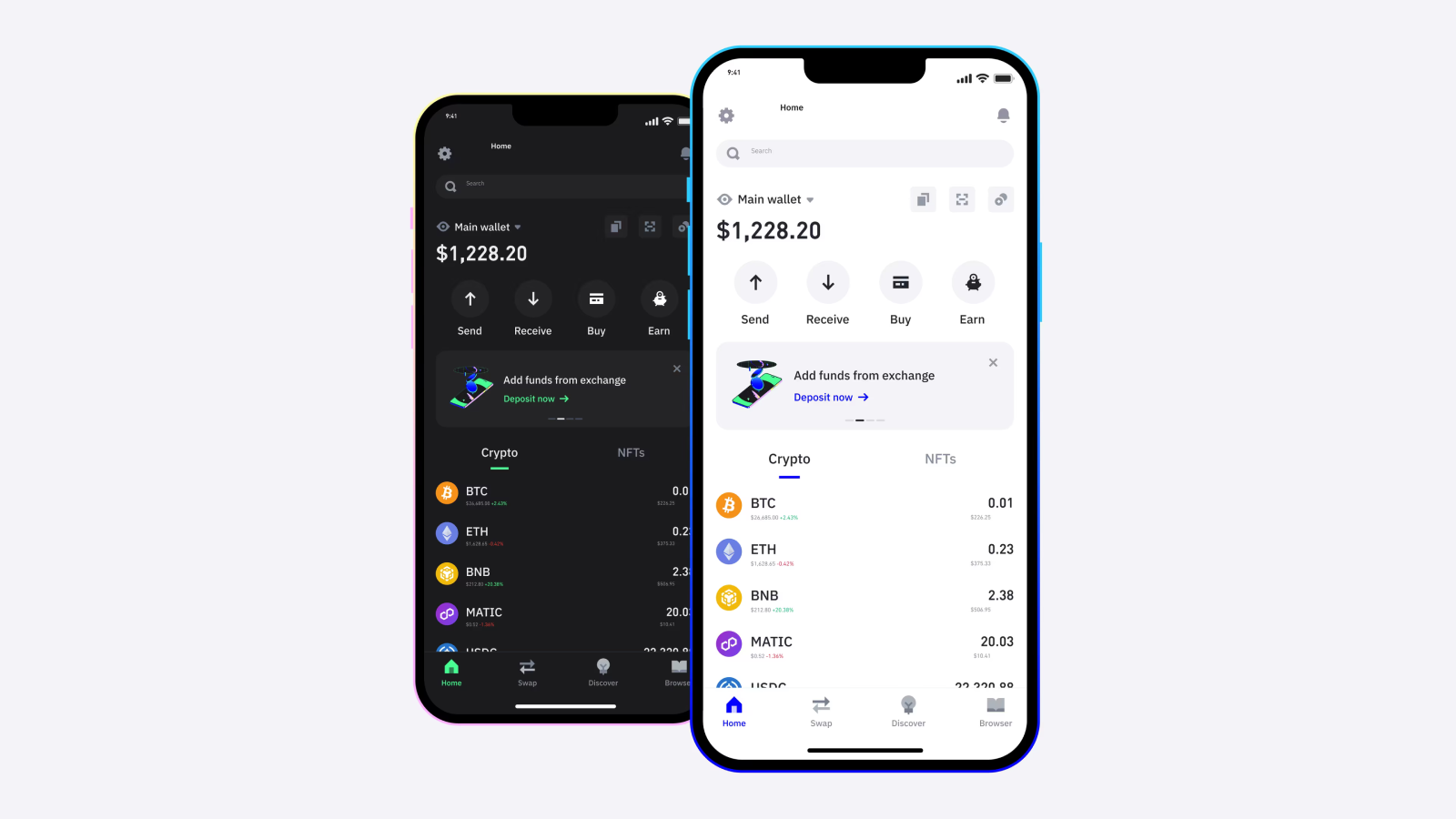
Trust Wallet is a practical Ethereum wallet for users who want ETH, ERC-20 tokens, Layer 2 access, and Web3 features primarily on mobile.
It supports Ethereum alongside networks such as Arbitrum, Base, and Optimism, with built-in access to swaps, staking, dApps, and NFTs. Trust Wallet also includes a Security Scanner designed to flag potentially risky transactions and dApp interactions before approval.
Its broader multichain focus makes it useful beyond Ethereum, but users looking for deeper EVM transaction analysis may prefer a more specialized wallet.
Best for: Mobile ETH users who also want multichain access
Main trade-off: Less Ethereum-specific than wallets built primarily around EVM and DeFi workflows
Rainbow — Best Ethereum-Native Mobile Wallet
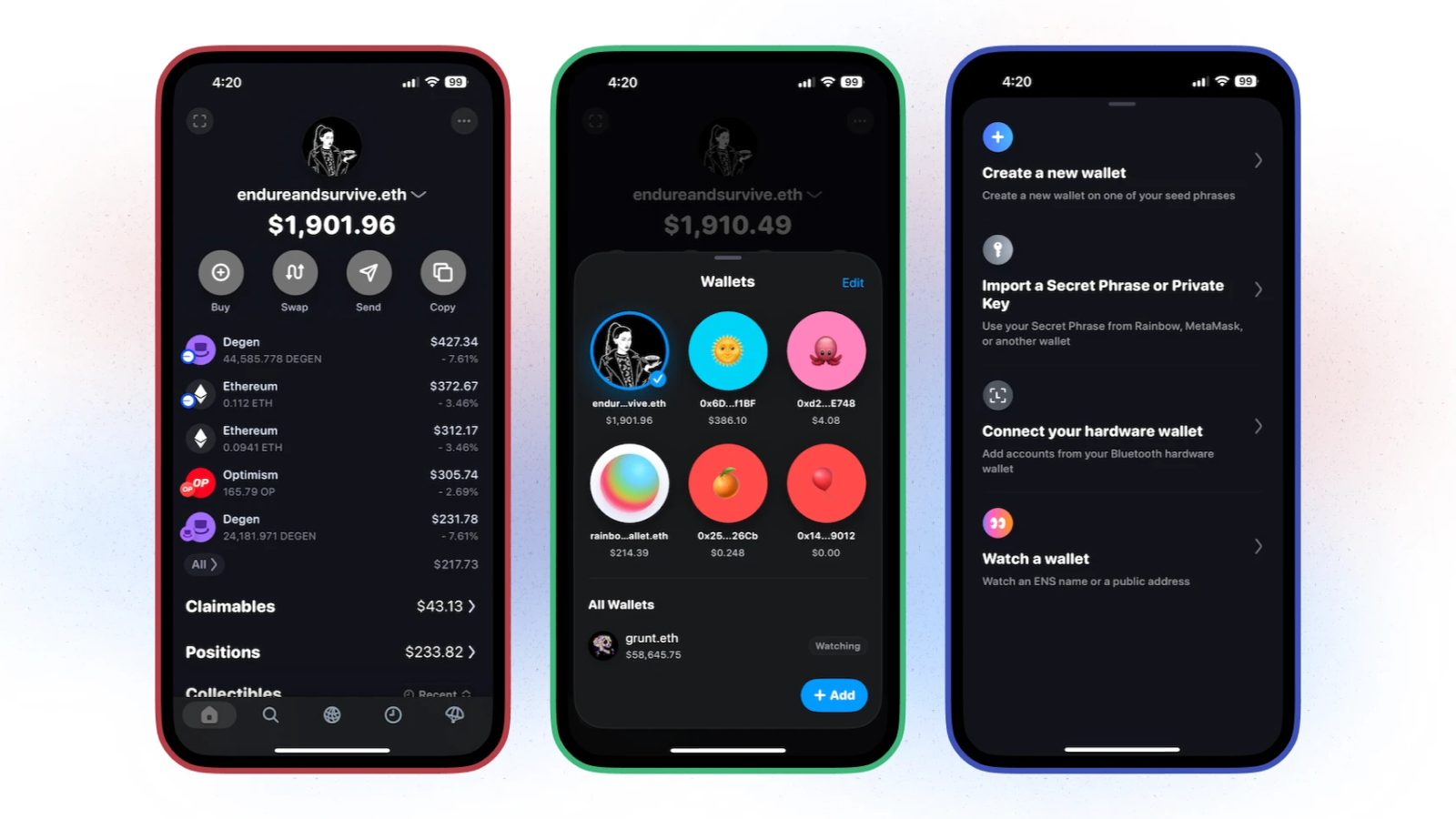
Rainbow is built around the Ethereum ecosystem, with a clean mobile-first experience for ETH, tokens, NFTs, dApps, and Layer 2 networks.
Rainbow supports Ethereum alongside Base, Arbitrum, Optimism, zkSync, Linea, Scroll, Unichain, and a growing range of other EVM networks. Assets from supported networks appear together in the wallet, while users can connect directly to dApps from mobile or the browser extension.
Its Ethereum-first design is the main attraction: users who spend most of their time across Ethereum and its L2 ecosystem get a more focused experience than with a broad multichain wallet.
Best for: Mobile Ethereum users, L2 activity, NFTs, and dApps
Main trade-off: Less useful as an all-purpose wallet for users heavily active on non-EVM ecosystems
Using Ethereum Across Layer 2s
Using Ethereum in 2026 increasingly means using Layer 2 networks such as Base, Arbitrum, and Optimism — and a good wallet should make moving between them easy to understand.
The same Ethereum address can generally be used across EVM-compatible networks, but balances remain separate on each network. ETH on Arbitrum does not automatically become ETH on Base or Ethereum Mainnet; assets need to be transferred or bridged between networks.
Three things matter in practice:
- Network selection — Make sure the wallet and dApp are operating on the intended L2
- Gas balance — Keep enough of the required gas asset on the network where you want to transact
- Bridging — Moving assets between Mainnet and L2s is a separate onchain action, not a simple wallet balance change
Ethereum wallet support now extends far beyond Mainnet. Ethereum L2s currently secure roughly $44 billion in value, with Base and Arbitrum alone accounting for more than $27 billion.
Ethereum Wallets in 2026: What Actually Changed?
Ethereum wallets are becoming programmable accounts, adding features such as transaction batching, gas sponsorship, flexible permissions, and new recovery options.
The shift accelerated with EIP-7702, activated with Pectra in 2025. It allows existing Ethereum accounts to use smart-account functionality without forcing users to move to a new address. In practice, wallets can build simpler flows around actions that once required several separate transactions.
Account abstraction is already operating at meaningful scale: Ethereum.org reports more than 26 million smart accounts and 170 million UserOperations through ERC-4337. Ethereum’s 2026 roadmap continues to treat native account abstraction as a major UX priority.
For wallet users, the change is less about the underlying EIPs and more about the experience: fewer repetitive approvals, more flexible security rules, better recovery, and less dependence on keeping ETH available for every individual action.
Ethereum Wallet Security: Know What You’re Signing
Protecting the recovery phrase is only one part of Ethereum wallet security — the transaction, approval, or message you sign can also give a smart contract access to your assets.
- Check token approvals — Avoid giving unlimited spending access when a smaller allowance is enough
- Preview balance changes — Transaction simulation can show which assets are expected to enter or leave the wallet
- Read permit requests carefully — A signature can authorize token spending without looking like a normal ETH transfer
- Verify the dApp and contract — A familiar-looking interface does not guarantee the transaction behind it is safe
- Use hardware signing for larger balances — Review critical transaction details on the signing device, not only in the browser
Ethereum is also pushing toward Clear Signing through ERC-7730, which lets wallets translate raw smart-contract data into readable actions such as the asset being sent, the amount, and the protocol involved. The Ethereum Foundation argues that unclear transaction approvals have been a recurring final step in major crypto losses.
The practical rule is simple: if the wallet cannot clearly show what an Ethereum transaction will do, treat the signature as a higher-risk action.
Ready to manage ETH? Get Atomic Wallet to store, send, swap, and manage Ethereum from one self-custody wallet.