Bitcoin Betting or Prediction Trading? How Polymarket Works for Crypto Markets
Most people searching for Bitcoin betting are not really looking for a casino. They are looking for a way to take a position on Bitcoin without simply buying or shorting BTC. That can mean predicting a price move, reacting to crypto news, or trading around a major market event.
Polymarket approaches this differently from a traditional betting app. It turns Bitcoin-related outcomes into open markets where prices move as traders reassess probabilities. The question is no longer just “will this happen?” but “is the market currently pricing this outcome correctly?”
That shift matters. Bitcoin moves fast, and static bets often fail to reflect how crypto traders actually think. Prediction markets create a more flexible model, where users can enter, exit, and adjust positions as the market changes.
What Is Bitcoin Betting and What Users Actually Look For
Bitcoin betting usually refers to placing money on BTC-related outcomes: whether the price will rise, whether Bitcoin will hit a certain level, or whether a major crypto event will push the market in a specific direction. The phrase sounds simple, but the intent behind it is broader.
Many users are not looking for roulette-style crypto gambling. They are looking for exposure to Bitcoin scenarios. For example, they may want to trade the probability of BTC reaching a new high, reacting to macro news, or moving after an ETF-related announcement.
The problem with traditional betting-style platforms is that they often reduce this intent to a fixed wager. You choose an outcome, accept the odds, and wait. That can work for simple events, but Bitcoin is not static. It trades 24/7, reacts instantly to news, and often shifts before a final outcome is clear.
That is why prediction markets fit the Bitcoin use case better. They allow users to trade changing probabilities instead of locking into one fixed bet. For BTC-related markets, that means the focus moves from “betting on Bitcoin” to actively pricing what the market thinks Bitcoin will do next.
What Is Polymarket and How It Works
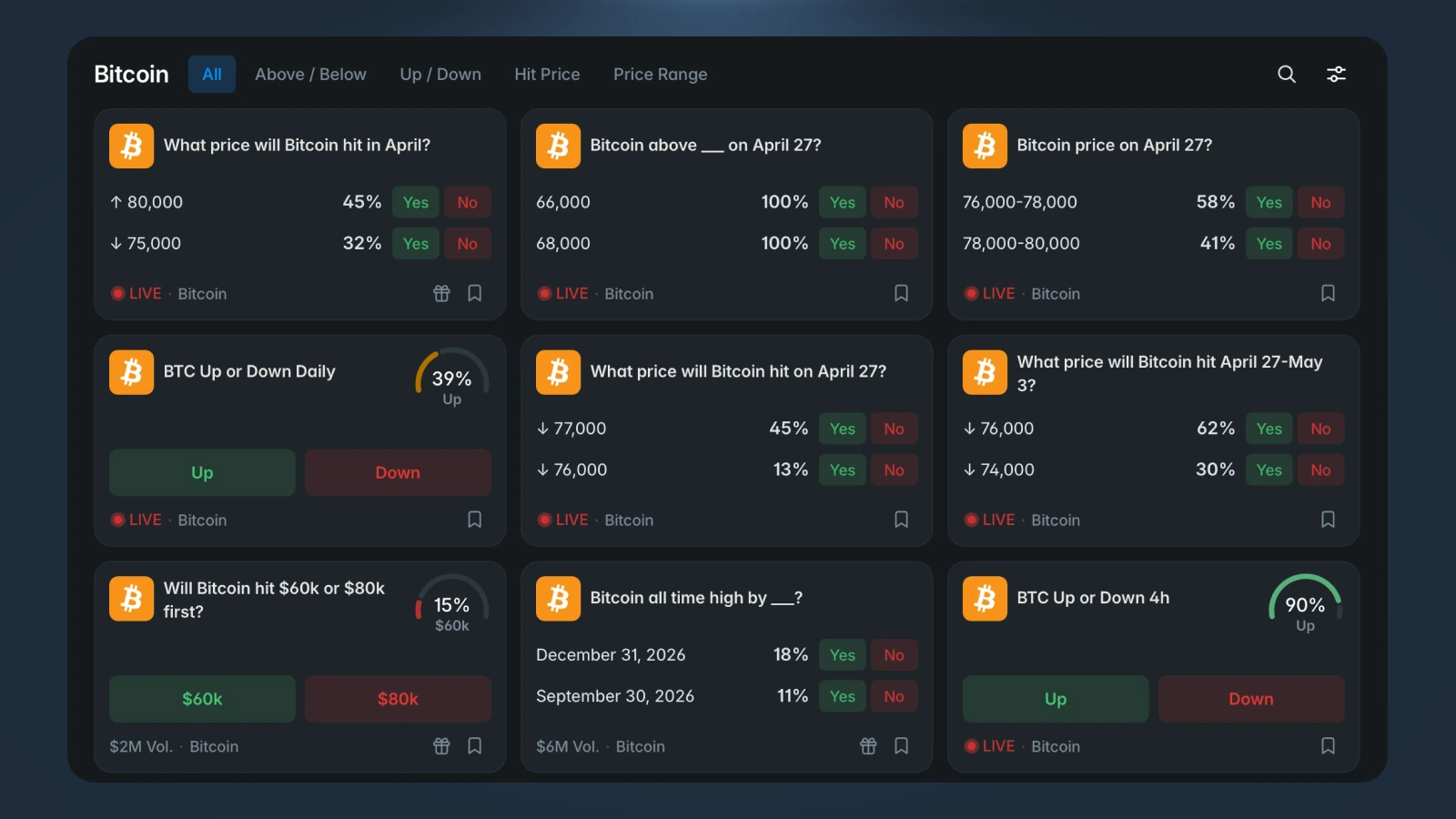
Polymarket is a prediction market platform where users trade on the likelihood of real-world events, including Bitcoin-related outcomes. Instead of placing a fixed bet, users buy and sell positions that reflect how probable they believe an event is.
Each market is built around a simple question, such as whether Bitcoin will reach a certain price by a specific date. There are two sides to every market — yes and no — and each side has a price between 0 and 1. That price represents the current market consensus. If a “yes” share trades at 0.65, the market is effectively saying there is a 65% chance of that outcome.
What makes this model different is that positions are fluid. You are not locked in after entering a trade. If the probability shifts in your favor, you can exit early and take profit. If sentiment changes, you can close or adjust your position before the final result.
This creates a trading environment that behaves more like a market than a sportsbook. Prices move continuously, driven by news, sentiment, and trader positioning — the same forces that move Bitcoin itself.
How Bitcoin Prediction Markets Work on Polymarket
Bitcoin markets on Polymarket are typically structured around price levels, timeframes, or major events that could impact the crypto market. Instead of trading BTC directly, users trade expectations about what will happen next.
For example, a market might ask whether Bitcoin will trade above a certain level by a given date. As traders enter positions, the price of “yes” and “no” adjusts in real time, reflecting how the market views that outcome.
This allows users to approach Bitcoin from a different angle. Rather than holding BTC and waiting, they can:
- take a position on a specific scenario
- react to news and sentiment shifts
- exit when the probability moves in their favor
The key difference is that value does not come only from being right at the end. It comes from how the market reprices probability over time. For Bitcoin — where narratives change quickly — this makes prediction markets a more flexible way to engage with price expectations.
Bitcoin Betting vs Prediction Trading: Key Differences
At a surface level, Bitcoin betting and prediction markets may look similar. In both cases, you are taking a position on an outcome. The difference is in how that position behaves over time.
Traditional crypto betting platforms are built around fixed wagers. You choose a side, accept the odds, and wait for the result. Your outcome depends entirely on being right at the end.
Prediction markets work differently. The position itself has a price that moves. You are not just predicting the outcome — you are trading how the market values that outcome over time.
The distinction becomes clearer when you compare the mechanics:
Why Traders Use Polymarket for Bitcoin Markets
Bitcoin is driven by narratives as much as by price. News, macro signals, ETF flows, and sentiment can all shift expectations quickly. Prediction markets allow traders to express those expectations directly.
One of the main reasons traders use Polymarket is flexibility. Instead of holding BTC through volatility, they can take positions on specific outcomes and adjust them as conditions change. This is especially useful around events where the direction is uncertain but volatility is expected.
Another factor is how closely prediction markets reflect sentiment. Prices update continuously as participants react to new information. This creates a real-time view of how the market is pricing a particular Bitcoin scenario.
For traders who are used to reacting quickly, this model feels more natural. It aligns with how crypto markets behave — fast, narrative-driven, and constantly repricing expectations.
Risks of Bitcoin Prediction Trading
Trading Bitcoin outcomes through prediction markets introduces a different set of risks compared to holding BTC or using traditional trading platforms.
The first is volatility. Bitcoin-related markets can reprice quickly, especially around news events or sudden market moves. A position that looks favorable can shift within minutes if sentiment changes.
Timing also plays a significant role. Since positions can be entered and exited at any point, the result depends not only on being right about the outcome, but also on when the position is opened or closed.
Liquidity varies across markets. While major Bitcoin markets tend to have strong participation, more niche scenarios may have wider spreads and less efficient pricing, which can impact execution.
Finally, each market resolves based on predefined rules. Understanding how an outcome is defined is critical, as the resolution may not always align with assumptions if the wording is interpreted differently.
Wallets, Privacy, and Control in Polymarket
Because Polymarket is non-custodial, every interaction happens through a wallet. This means that activity is tied to an on-chain address, and over time, that address can reflect trading patterns, positions, and behavior.
In Bitcoin-related markets, where positions may be tied to specific strategies or timing decisions, this visibility becomes relevant. It is not just about accessing the market, but about how activity is structured and exposed.
Using a solution like Atomic Wallet helps introduce more control over that process. By separating how assets are stored and how trading activity is executed, users can reduce how directly their actions are linked.
This does not remove transparency, but it changes how easily a single wallet can be analyzed over time. For users who actively trade Bitcoin scenarios, that added layer of control becomes part of the overall setup, not just an afterthought.
Crypto Betting Apps vs Prediction Markets
The term “crypto betting app” is often used broadly, but it typically refers to sportsbook-style platforms with fixed odds. Prediction markets operate differently, turning outcomes into tradable probabilities that evolve in real time.
Conclusion: Is Polymarket Bitcoin Betting?
Polymarket may look like Bitcoin betting on the surface, but the mechanics are fundamentally different.
Instead of placing fixed wagers, users trade probabilities tied to Bitcoin-related outcomes. Positions are dynamic, prices move in real time, and value can be realized before the final result. The focus shifts from simply being right to managing a position as the market evolves.
For Bitcoin, this model makes more sense. It reflects how the asset actually trades — continuously, reactively, and based on shifting expectations.
At the same time, interacting with these markets is not just about choosing outcomes. Because everything is wallet-based, the way activity is structured becomes part of the process.
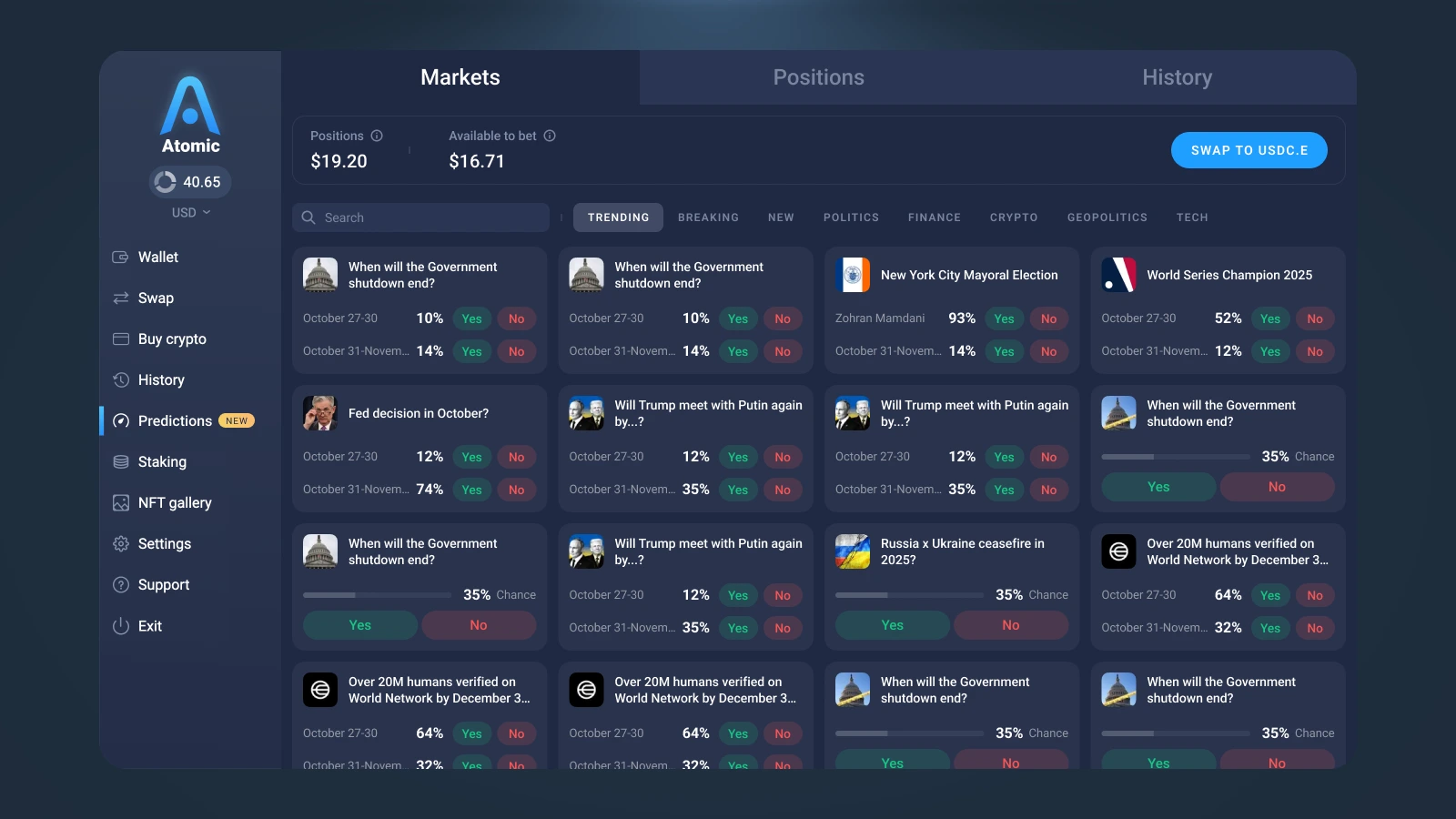
Using tools like Atomic Wallet allows users to maintain control over assets while reducing how directly trading behavior is linked to a single address.