Is Polymarket Safe? How Atomic Wallet Adds a Security Layer for Private Prediction Trading
Polymarket is a decentralized prediction market built on blockchain infrastructure, where users trade on real-world events using crypto. From a technical standpoint, it is considered non-custodial, meaning users retain control over their funds through their own wallets rather than depositing assets into a centralized platform.
This architecture provides a solid baseline of security. There is no centralized custody risk, and transactions are executed transparently on-chain. However, this same transparency introduces a different dimension of risk.
Every trade, position, and interaction on Polymarket is tied to a public wallet address. This means that while the platform itself can be secure, user activity is fully visible and traceable on-chain.
In other words: Polymarket can be safe to use — but it is not private by default.
The Hidden Risk of On-Chain Transparency
Blockchain transparency is often seen as a feature. But in the context of trading, it creates a structural trade-off: what is secure is also observable.
On Polymarket, any external observer can analyze:
- trading activity and frequency
- position sizes and market exposure
- historical behavior and patterns
Over time, this data can be used to build detailed profiles of individual wallets. For active traders, this introduces several risks:
- strategy exposure — others can infer and replicate trades
- behavioral tracking — patterns can be monitored and analyzed
- position visibility — large bets become publicly visible
This is not a flaw specific to Polymarket—it is a direct result of how public blockchains work. For users who value both, the question becomes not whether to use prediction markets—but how to interact with them more privately.
What Is a Polymarket Wallet and How It Works
To use Polymarket, you need a Web3 wallet - this is your entry point to the platform and the identity through which all activity is recorded. Every action you take—placing trades, holding positions, interacting with markets—is linked to your wallet address. Unlike traditional platforms, there are no usernames or accounts in the usual sense.
Your wallet is your identity.
This has two important implications:
- you maintain full control over your funds (non-custodial)
- your activity is publicly associated with a single address
Because of this, the choice of wallet is not just about storage—it directly affects:
- how your activity can be tracked
- how easily your actions can be linked over time
- how exposed your trading behavior becomes
In prediction markets, where timing, strategy, and positioning matter, this visibility can become a disadvantage.
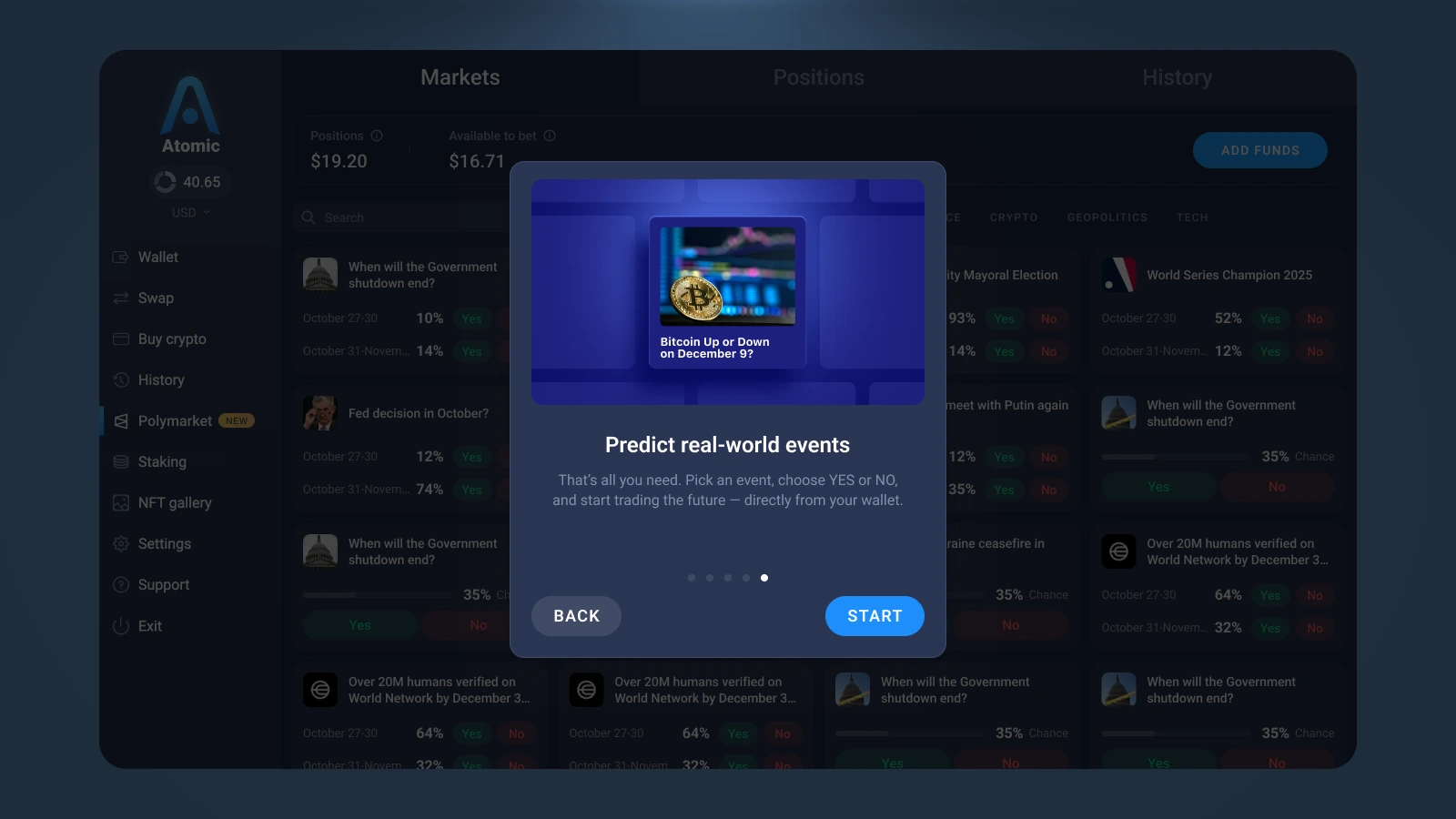
How Atomic Wallet Adds a Privacy Layer to Polymarket
Atomic Wallet introduces an additional layer between your main wallet and your on-chain activity, helping reduce direct traceability when interacting with platforms like Polymarket. Instead of using a single address for all interactions, Atomic Wallet leverages separate proxy addresses, effectively isolating trading activity from your primary wallet.
This approach provides:
- activity separation — trades are not directly linked to your main wallet
- reduced traceability — harder to build a consistent profile across actions
- better control over exposure — limits how much of your behavior is publicly visible
Importantly, this does not remove blockchain transparency. Transactions are still recorded on-chain. However, it changes how easily those actions can be connected back to a single identity.
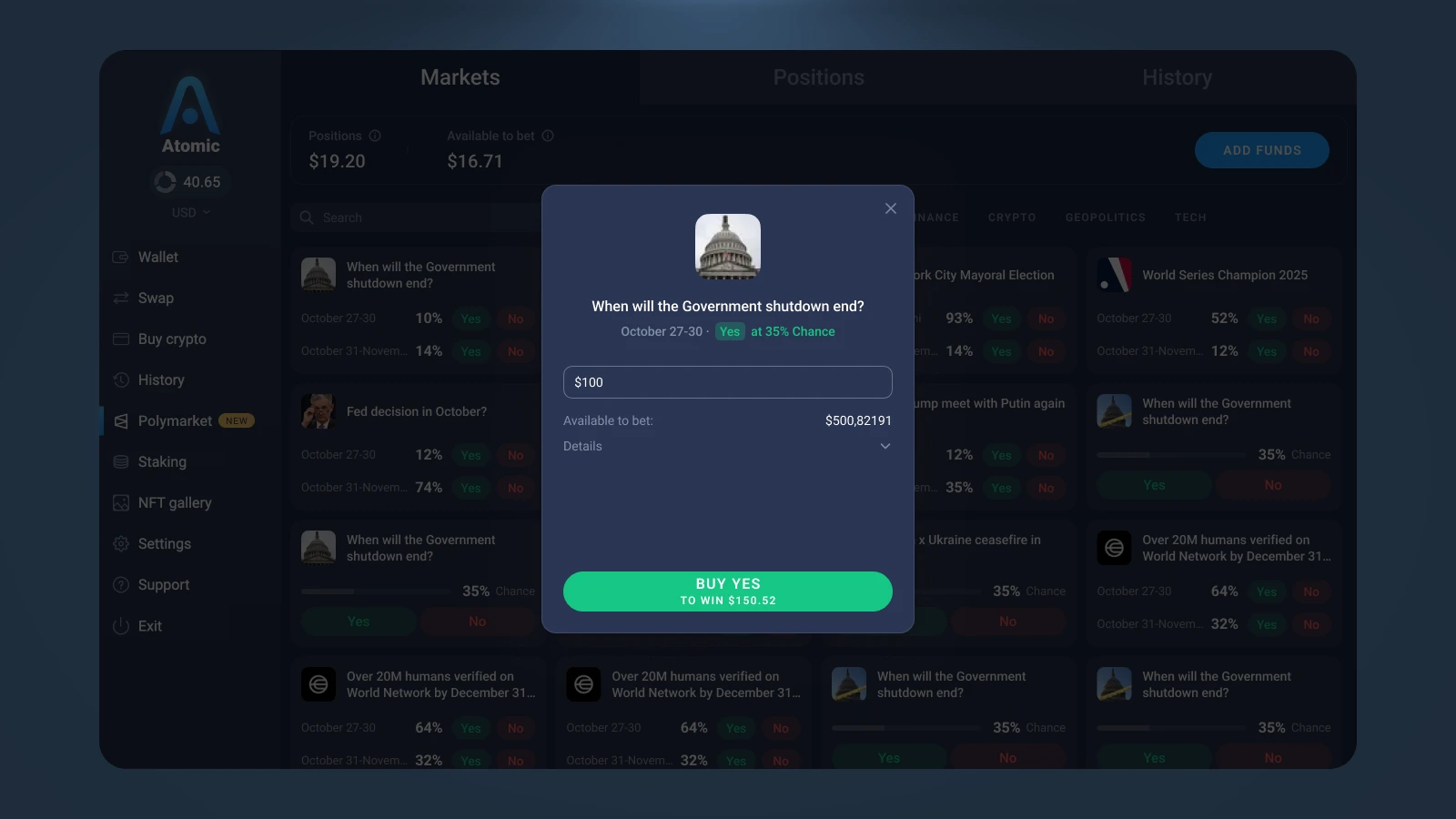
For users active in prediction markets, this added layer helps shift from full visibility toward more controlled and private interaction, without sacrificing the benefits of a non-custodial setup.
Why Privacy Matters in Prediction Markets
In prediction markets, information is not just data—it is an edge.
Unlike casual transactions, trading activity on platforms like Polymarket reflects:
- opinions on real-world events
- timing decisions
- capital allocation strategies
When this information is fully visible on-chain, it can be analyzed and used by others. Over time, wallets with consistent performance or large positions can attract attention, making it easier to:
- replicate trades
- anticipate behavior
- track strategy shifts
For active participants, this creates a competitive disadvantage.
What starts as transparency can turn into predictability.
Privacy, in this context, is not about hiding activity—it is about controlling how easily it can be interpreted and linked over time. This becomes especially relevant as markets grow and more sophisticated participants enter the space.
Predictions Mobile: Trade Faster Without Exposing Your Main Wallet
As interaction with prediction markets becomes more frequent, speed and accessibility start to matter as much as strategy.
With Predictions Mobile coming soon, Atomic Wallet is expanding how users access platforms like Polymarket—making it easier to react to market changes in real time, directly from mobile devices.
This shift toward faster trading increases the importance of maintaining separation between:
- your core wallet
- your active trading activity
More frequent interactions mean more on-chain data points. Without proper separation, this can quickly build a detailed and trackable profile.
By combining mobile accessibility with the same proxy-based structure, Atomic Wallet allows users to stay responsive to market opportunities while keeping their primary wallet less exposed. In a trading environment where both speed and discretion matter, this balance becomes a key advantage.
How to Use Polymarket More Securely with Atomic Wallet
Using Polymarket more securely is less about changing the platform itself and more about how you structure wallet activity. With Atomic Wallet, users can reduce direct exposure, separate identities, and maintain full control over assets through a more disciplined setup.
Conclusion: Is Polymarket Safe for Trading?
Polymarket is built on secure, non-custodial infrastructure, making it fundamentally safe from a technical standpoint. However, like all on-chain platforms, it operates with full transparency by default.
This creates a trade-off:
- strong security
- but high visibility of user activity
For traders, especially in competitive prediction markets, this visibility can become a disadvantage.
Adding a layer of separation through tools like Atomic Wallet helps shift that balance. Instead of exposing all activity through a single address, users gain more control over how their actions are linked and interpreted.