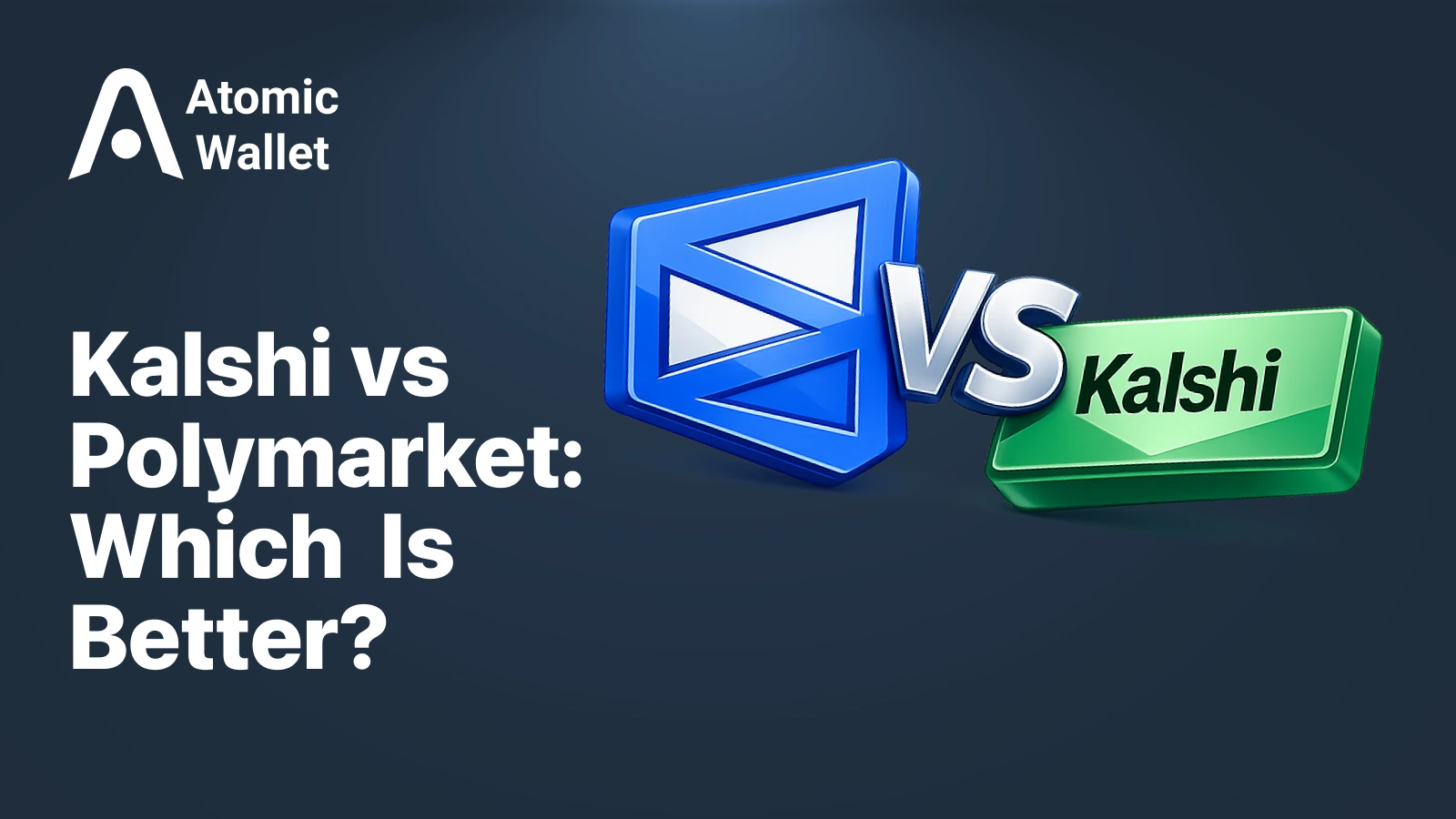
Kalshi vs Polymarket: Regulated vs Decentralized Prediction Markets Explained
Prediction markets are platforms where users trade on the outcome of real-world events—ranging from elections and economic indicators to sports and global news. Instead of buying assets, participants take positions on probabilities: how likely an event is to happen.
Each market typically resolves to a binary outcome (e.g., yes or no), with prices fluctuating based on supply and demand. If a user correctly predicts the outcome, the position pays out at full value.
What makes prediction markets unique is their ability to aggregate information. Prices often reflect collective sentiment and real-time expectations, turning markets into a form of crowd-sourced forecasting.
In recent years, the space has evolved into two distinct models:
- regulated platforms operating within legal frameworks
- crypto-native platforms built on blockchain infrastructure
Kalshi and Polymarket represent these two approaches.
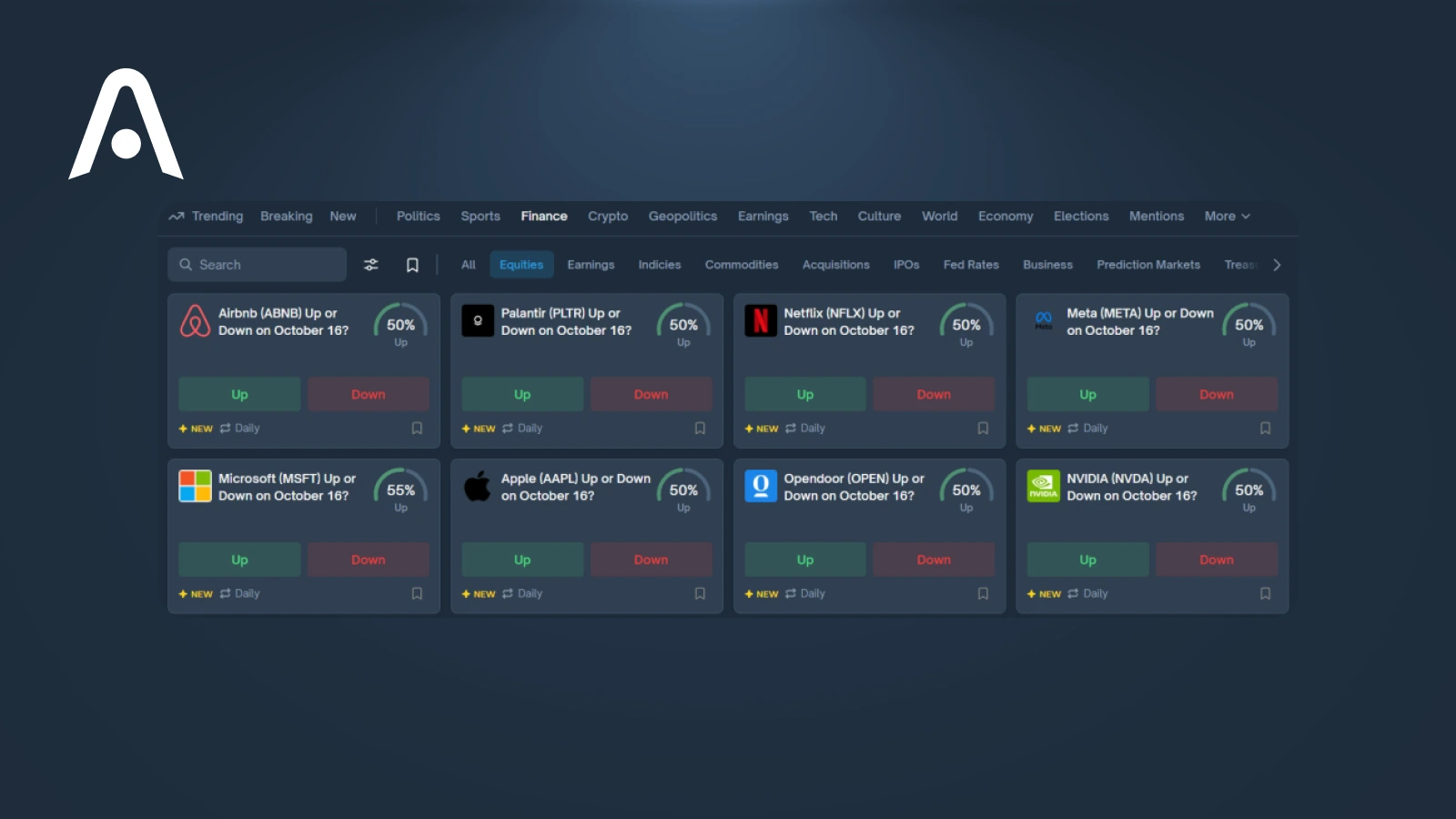
What Is Kalshi?
Kalshi is a CFTC-regulated prediction market exchange based in the United States. It allows users to trade event contracts using U.S. dollars, operating within a fully compliant legal framework.
As a regulated platform, Kalshi requires:
- identity verification (KYC)
- adherence to U.S. financial regulations
- access primarily for U.S.-based users
This structure provides a familiar experience similar to traditional financial platforms. Users deposit funds, trade contracts, and interact through a centralized interface.
The advantage of this model is regulatory clarity and compliance. Users know the platform operates under established rules, which reduces legal uncertainty.
However, this comes with trade-offs:
- limited geographic access
- less flexibility in available markets
- full account-based tracking of user activity
Kalshi represents the regulated, centralized approach to prediction markets—prioritizing compliance and stability over open access and flexibility.
What Is Polymarket?
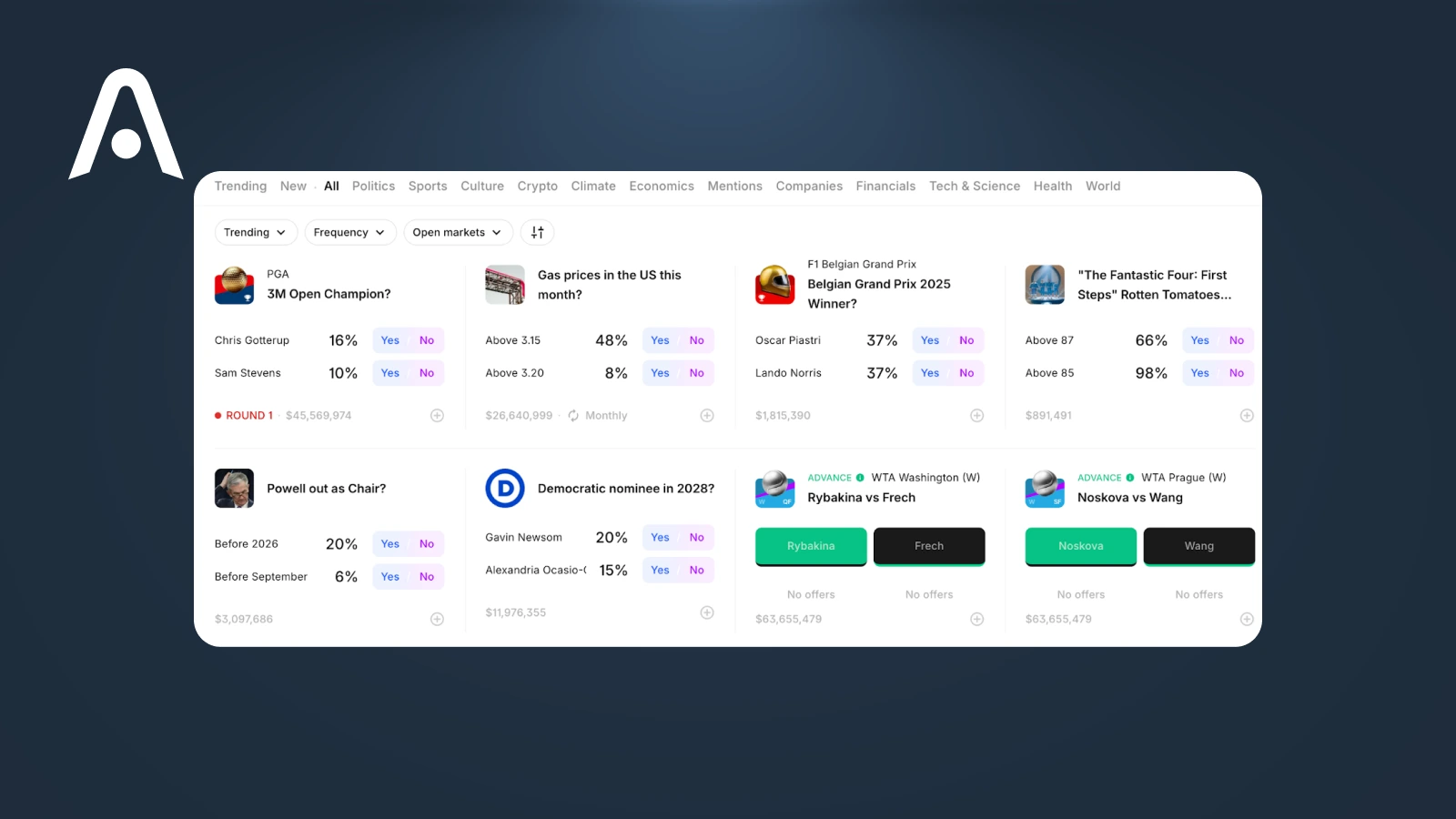
Polymarket is a crypto-native prediction market that operates on blockchain infrastructure, allowing users to trade on real-world events using USDC.
Unlike Kalshi, Polymarket is non-custodial. Users do not deposit funds into a centralized account—instead, they connect a Web3 wallet and interact with markets directly on-chain. This means:
- full control over assets
- no traditional account system
- global access (with some regional limitations)
All activity on Polymarket is recorded on a public blockchain, making trades transparent and verifiable in real time.
This model enables:
- faster market creation and resolution
- broader range of topics (including crypto, geopolitics, niche events)
- permissionless participation
However, it also introduces a different set of considerations. Since wallets act as identities, trading behavior is visible and traceable on-chain, which can impact privacy.
Polymarket represents the decentralized approach—prioritizing openness, flexibility, and crypto-native interaction over regulatory structure.
Kalshi vs Polymarket: Key Differences
Kalshi and Polymarket operate under fundamentally different models. One prioritizes regulation and controlled access, while the other focuses on open, crypto-native participation and flexibility.
Regulation vs Decentralization: What Actually Matters
The core difference between Kalshi and Polymarket is not just technical—it is structural.
Kalshi operates within a regulated environment, where:
- rules are clearly defined
- user access is controlled
- compliance is enforced
This reduces legal uncertainty and creates a predictable framework. For many users, especially in the U.S., this is a major advantage.
Polymarket, by contrast, operates as a decentralized system, where:
- access is more open
- markets are more flexible
- participation is driven by crypto infrastructure rather than regulation
This creates a different kind of value: speed, global reach, and fewer restrictions.
The trade-off is clear:
- regulation provides structure and protection
- decentralization provides access and flexibility
Neither model is inherently better. The right choice depends on what the user prioritizes—compliance and simplicity, or control and openness.
Which Platform Is Better for Different Users
Choosing between Kalshi and Polymarket depends less on features and more on user profile and goals.
Kalshi is better suited for:
- users based in the United States
- those who prefer trading with fiat (USD)
- users who value regulatory clarity and compliance
- traders looking for a familiar, account-based experience
Polymarket is better suited for:
- crypto-native users
- those who want global access to markets
- traders comfortable with Web3 wallets
- users who value flexibility and a broader range of events
Kalshi simplifies the experience by managing custody and access. Polymarket gives users more control—but requires them to manage wallets, assets, and exposure themselves.
This is where infrastructure choices start to matter. In a wallet-based system, how you interact with the platform becomes just as important as the platform itself.
Wallets, Privacy, and Control in Polymarket Trading
In Polymarket, your wallet is more than just a tool—it is your identity on the network.
Every trade, position, and interaction is tied to a public address, making activity transparent by default. While this ensures verifiability, it also means that trading behavior can be analyzed over time.
For active users, this creates a key consideration:
- strategies can become visible
- positions can be tracked
- patterns can be identified
Managing this exposure becomes part of the trading process.
Using a solution like Atomic Wallet introduces an additional layer of control. By leveraging separate addresses and activity separation, users can reduce how easily their actions are linked to a single wallet.
This does not remove transparency—but it changes how directly activity can be traced and aggregated. In a system where wallets define identity, even small improvements in separation can significantly affect privacy and control.
The Future of Prediction Markets
Prediction markets are evolving quickly, driven by both regulatory developments and crypto infrastructure.
On one side, platforms like Kalshi are expanding within legal frameworks, potentially bringing prediction trading closer to traditional finance.
On the other, crypto-native platforms like Polymarket continue to push toward:
- faster market creation
- broader global access
- deeper integration with Web3 ecosystems
As usage grows, two trends are becoming clear:
- mobile access is becoming essential
- user control over activity and assets is increasingly important
With Predictions Mobile coming soon, Atomic Wallet is aligning with this shift—enabling faster interaction with markets while maintaining the same focus on separation and non-custodial control.
The next phase of prediction markets will likely combine:
- accessibility
- speed
- and more refined user control
How platforms and tools balance these factors will define the user experience going forward.
Conclusion: Kalshi or Polymarket?
Kalshi and Polymarket are not direct substitutes—they reflect two different approaches to prediction markets.
Kalshi offers a regulated, structured environment, designed for users who prioritize compliance, fiat access, and a familiar trading experience.
Polymarket offers a decentralized, crypto-native model, where users gain flexibility, global access, and full control over their assets—but also take on more responsibility for how they interact with the network.
The choice depends on what matters more:
- simplicity and regulation
- or control and openness
For those leaning toward Polymarket, the setup goes beyond just accessing markets. Since trading is wallet-based, how you manage your wallet directly impacts privacy, exposure, and overall experience.
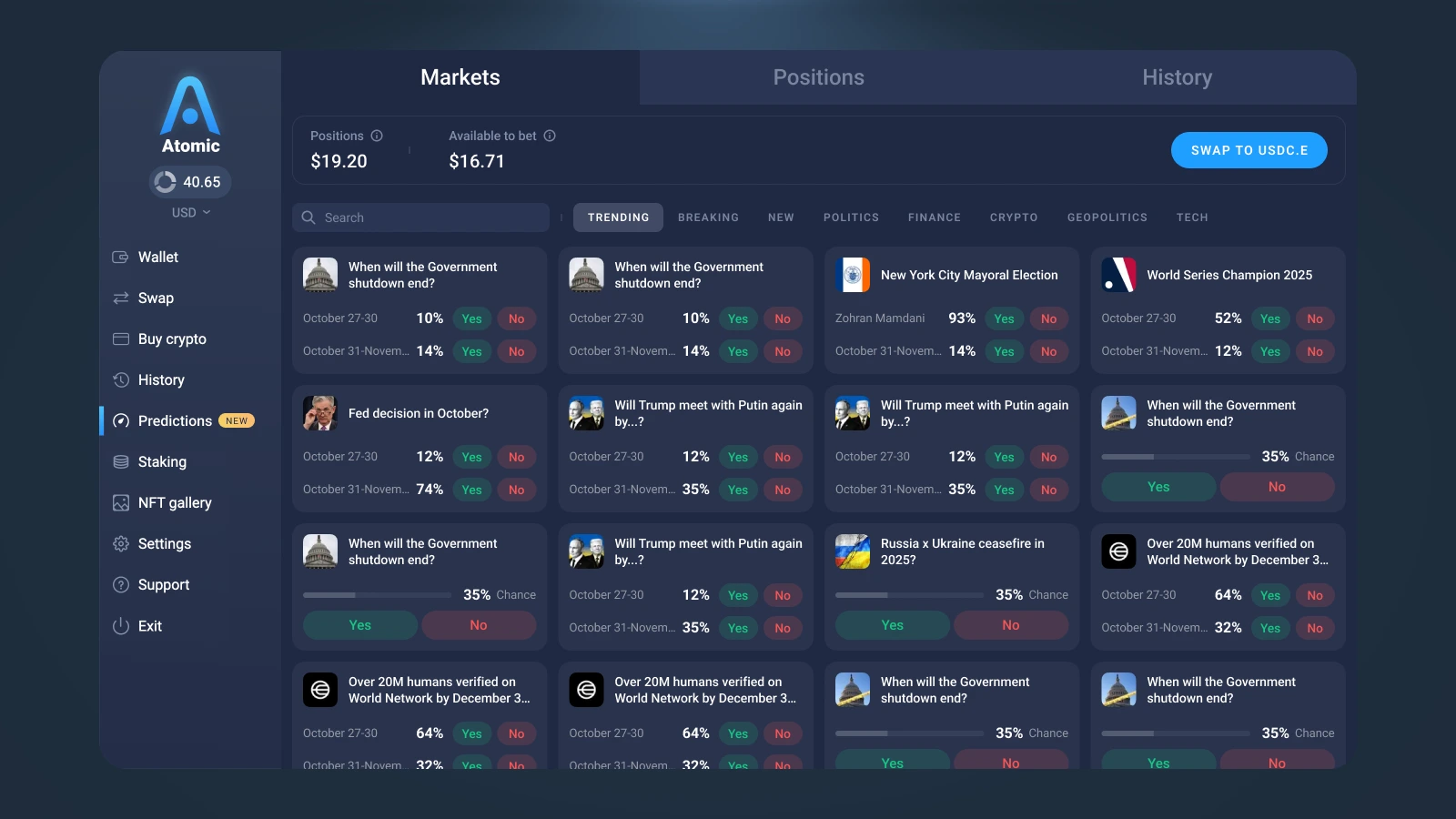
Using tools like Atomic Wallet allows users to maintain control while adding a layer of separation between their main holdings and trading activity.