Polymarket 2028 Election Markets: How Crypto Traders Price the Next Presidential Race
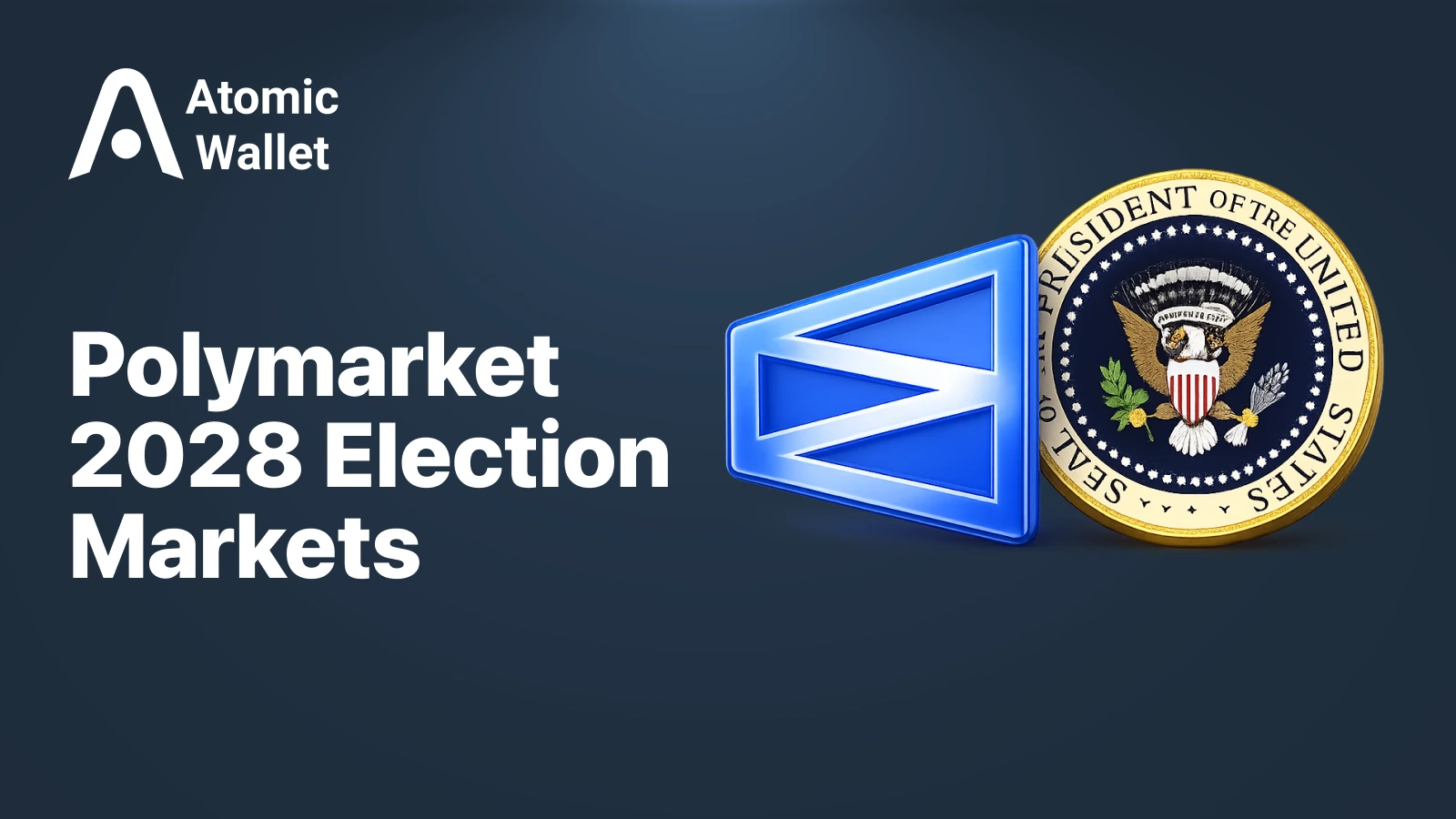
The 2028 U.S. presidential election is still years away, but on Polymarket, it is already being actively traded.
Instead of waiting for campaigns to fully form, users are taking positions on potential candidates, party nominations, and long-term political outcomes. Prices move as expectations shift, turning the election into a market that evolves over time rather than a single moment in the future.
This changes how political forecasting works. Rather than relying only on polls or expert opinions, Polymarket reflects what participants are willing to back with capital. The result is a live, constantly updating view of how the next presidential race is being priced.
What Are Polymarket 2028 Election Markets
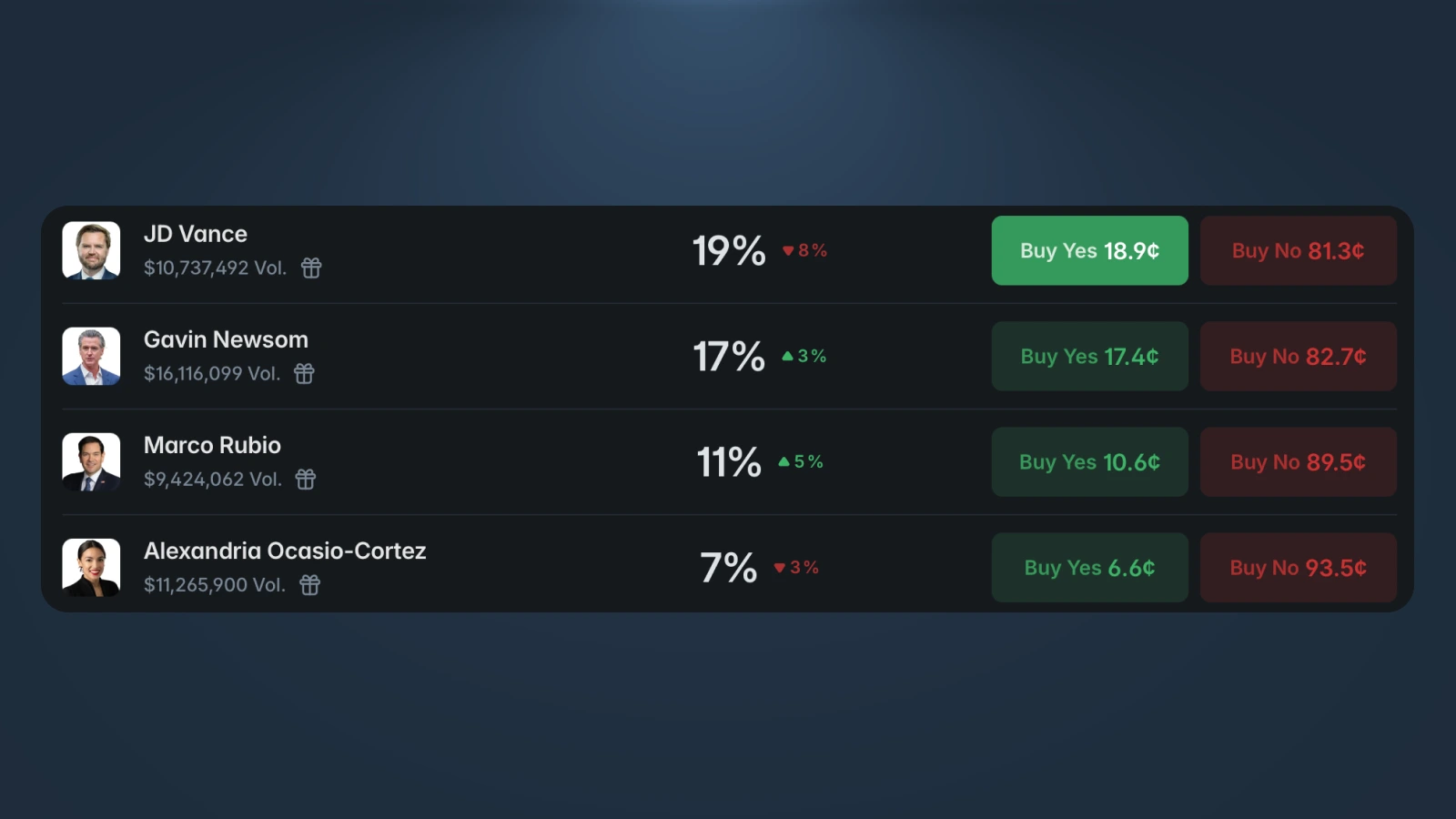
Polymarket 2028 election markets are prediction markets where users trade on outcomes related to the next U.S. presidential race. These include both broad questions, like who will win the presidency, and more specific ones, such as who will become a party’s nominee.
Each market is structured around a clear outcome and divided into yes and no positions. The price of each side reflects the current probability assigned by the market. As new information appears — from political developments to shifts in public attention — those probabilities adjust.
What makes these markets different is their timeframe. Unlike short-term events, election markets can remain active for years. Early prices often reflect speculation, narrative momentum, and emerging candidates rather than confirmed political realities.
This creates a market that is less about predicting a fixed outcome and more about tracking how expectations change over time.
How Election Prediction Markets Work on Polymarket
Election markets on Polymarket follow the same core structure as other prediction markets, but the time horizon and complexity are much larger. Each market is built around a specific political outcome, and users trade based on how likely they think that outcome is.
A position is expressed through yes or no shares. The price of a share reflects probability. If a candidate is trading at 0.40, the market is assigning roughly a 40% chance to that outcome. As traders buy and sell, the price adjusts continuously.
What makes this model different from traditional political forecasting is that positions are not static. Users can enter early, exit later, or adjust exposure as new information comes in. News cycles, candidate announcements, and shifts in sentiment all feed directly into price changes.
This creates a system where the market is not just predicting the election result. It is constantly repricing expectations based on what participants believe at any given moment.
Presidential Winner vs Nominee Markets Explained
Not all election markets on Polymarket represent the same type of outcome, and understanding the difference is important.
Winner markets focus on the final result — who will become President in 2028. These tend to attract the most attention, but they also involve the highest level of uncertainty because they depend on a long chain of events.
Nominee markets operate earlier in the process. They track which candidate will become the official nominee for a political party. In many cases, these markets are more sensitive to early signals such as:
- candidate announcements
- fundraising activity
- shifts in party support
Because nominee markets resolve before the general election, they often react faster to new information. They can also provide a clearer view of how the race is forming before it reaches the final stage.
Together, these two types of markets create a layered view of the election, where traders can engage with different phases of the political cycle rather than a single end result.
Why 2028 Election Markets Trade Years in Advance
One of the most unusual aspects of Polymarket’s election markets is how early they become active. Long before official campaigns are defined, users begin trading expectations around potential candidates and political scenarios.
This early activity is driven less by concrete data and more by narrative formation. Traders react to signals like media coverage, public appearances, policy positioning, and broader political trends. Even weak signals can move prices if enough participants believe they matter.
At this stage, markets function more as a reflection of sentiment than certainty. Probabilities can shift quickly as attention moves from one potential candidate to another. Over time, as the election cycle develops, these markets tend to become more structured and data-driven.
The result is a market that evolves in phases. Early pricing captures speculation and narrative momentum, while later stages incorporate polling data, campaign performance, and real-world developments.
Polymarket vs Polls: What’s the Difference
Prediction markets and opinion polls both aim to capture expectations about an election, but they work in different ways. Polls measure what people say at a specific moment, while Polymarket reflects how traders position capital as new information appears.
Why Prices Don’t Always Mean “True Odds”
At first glance, Polymarket prices look like clean probabilities. In reality, especially this far ahead of an election, they should be treated with caution.
Early-stage markets often include outcomes that are highly unlikely but still trade with noticeable probability. This can happen for several reasons. Some traders speculate on long-shot candidates in case narratives suddenly shift. Others take positions for short-term trading rather than long-term conviction. In some cases, low liquidity makes it easier for prices to move without strong consensus.
There is also a behavioral element. Attention alone can push a candidate higher, even if there is little structural support behind it. Media coverage, social media momentum, or a single event can temporarily distort how the market is pricing an outcome.
Because of this, Polymarket election prices are best understood as a live reflection of current sentiment, not a definitive forecast. The further away the event, the more noise is likely to be embedded in those probabilities.
Risks of Trading Election Markets
Trading long-term political markets introduces a different set of risks compared to short-term events.
The biggest factor is uncertainty. Over a multi-year horizon, candidates can enter or exit the race, political conditions can shift, and unexpected events can completely change the landscape. Positions taken early may need to be reassessed multiple times before resolution.
Time also matters. Capital can be tied up for extended periods, and the opportunity cost of holding a position becomes part of the equation.
Liquidity can vary depending on the market. While major election markets tend to have strong participation, more specific or early-stage markets may have thinner order books, which can affect pricing and execution.
Finally, every market resolves based on predefined rules. Understanding exactly how an outcome is defined is critical, especially in political scenarios where wording and interpretation can matter.
Wallets, Privacy, and Political Market Activity
On Polymarket, every trade is tied to a wallet address. Over time, that address can reflect how a user interacts with political markets — which candidates they back, how early they enter positions, and how they react to changes in sentiment.
In a long-term market like the 2028 election, this creates a persistent activity trail. Positions are not just opened and closed in a short window. They can span months or years, making it easier to observe patterns and behavior.
This does not affect how the market functions, but it does change how visible participation becomes. For users who actively trade political scenarios, managing that exposure can be part of the overall setup.
Using a solution like Atomic Wallet allows users to separate how assets are stored from how trading activity is executed. This adds a layer of control over how actions are linked over time, without changing the underlying transparency of the network.
Predictions Mobile: Access Election Markets Anytime
Long-term markets like the 2028 election are not just about a single moment. They evolve continuously as new information enters the system.
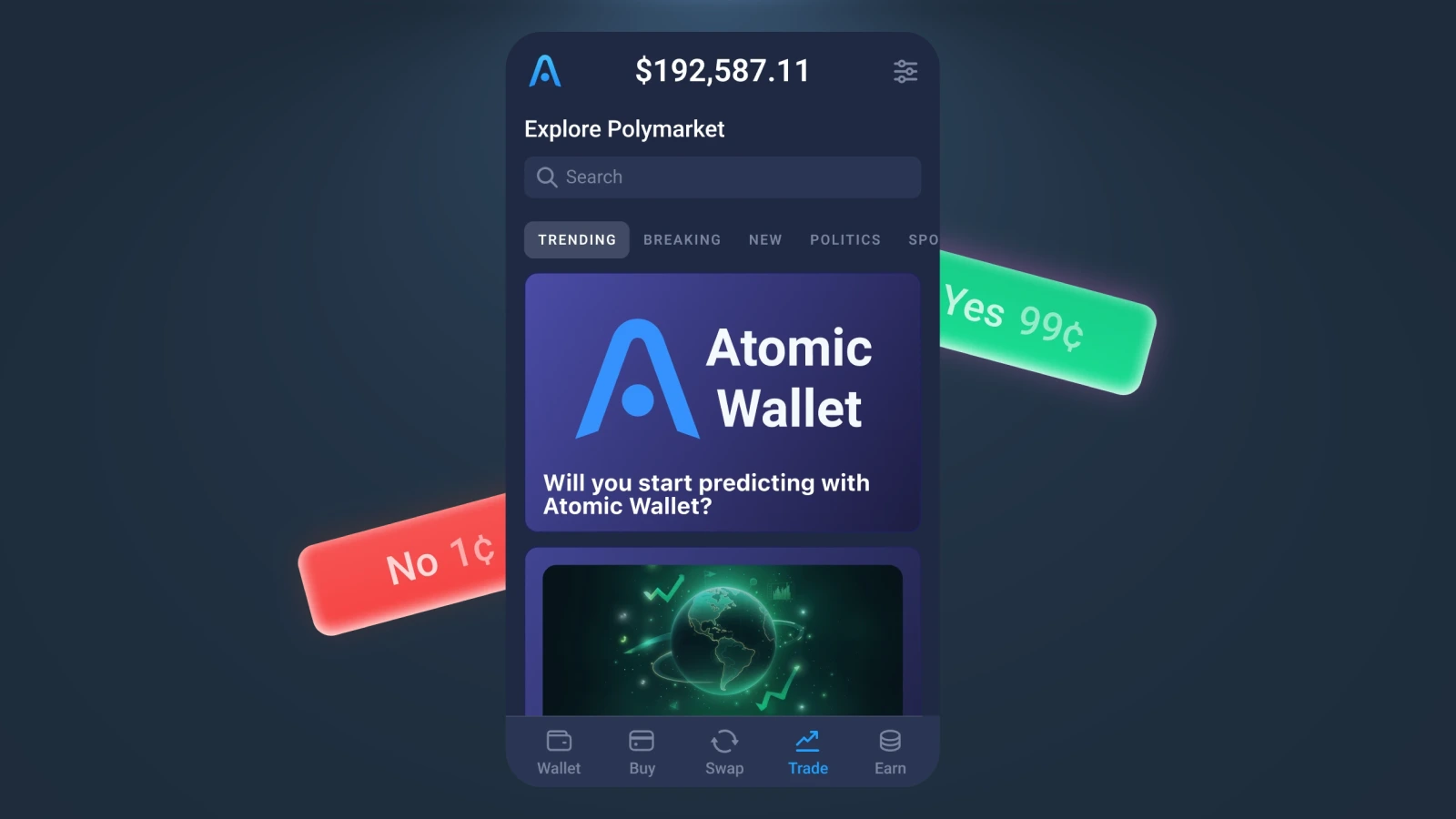
With Predictions Mobile coming soon, Atomic Wallet is extending access to these markets, making it easier to follow and react to changes without relying on a desktop setup.
This matters more for political markets than it may seem at first. Because positions can be adjusted at any time, having constant access allows users to:
- respond to breaking news
- adjust exposure as narratives shift
- manage positions across different phases of the election cycle
As prediction markets become more active and continuous, mobile access and flexible interaction start to play a larger role in how users participate.
Conclusion: Trading the 2028 Election on Polymarket
Polymarket turns the 2028 election into a market that evolves long before votes are cast. Instead of waiting for final outcomes, users engage with shifting expectations, pricing how likely different scenarios are at each stage of the political cycle.
This makes election markets less about a single prediction and more about following how narratives develop over time. Early positions reflect speculation, later ones reflect structure, and prices adjust as the race becomes clearer.
At the same time, participation is not just about choosing candidates. Because everything runs through a wallet, how activity is structured becomes part of the process. Long-term markets amplify this effect, as positions and behavior remain visible over extended periods.
Using tools like Atomic Wallet allows users to manage that interaction with more control, especially when engaging with markets that develop over months or years.