Polymarket Ethereum Markets: How Crypto Prediction Trading Works

Ethereum behaves differently from assets like Bitcoin. It is not only traded as a price chart but also evolves through changes in its ecosystem. Network upgrades, scaling developments, and broader adoption can all shift expectations. Because of that, static betting models often fail to capture how traders actually think about ETH.
This is where prediction markets come in. Platforms like Polymarket turn Ethereum-related outcomes into tradable markets, where prices reflect how likely something is to happen. Instead of placing a fixed bet, users can react to changing narratives and adjust positions as new information enters the market.
What Is Ethereum Betting?
The term “Ethereum betting” is often used to describe taking positions on ETH-related outcomes, but it can mean different things depending on the context. For some users, it refers to betting on price direction. For others, it includes expectations around events like upgrades, regulatory developments, or ecosystem growth.
Traditional crypto betting platforms tend to reduce this to a simple format: pick a side, accept the odds, and wait for the result. This approach works for straightforward outcomes but does not reflect how Ethereum actually moves.
ETH is influenced by multiple layers of activity. A single upgrade, a change in network usage, or a shift in developer sentiment can alter expectations quickly. In that environment, users often want more flexibility than a fixed bet can provide.
Prediction markets address this by allowing users to interact with probabilities instead of committing to one outcome. Rather than locking in a position, they can enter, exit, and adjust as the market reprices Ethereum-related scenarios.
What Is Polymarket and How It Works
Polymarket is a prediction market platform where users trade on the likelihood of real-world outcomes using crypto. Instead of placing a fixed bet, participants buy and sell positions that represent probabilities.
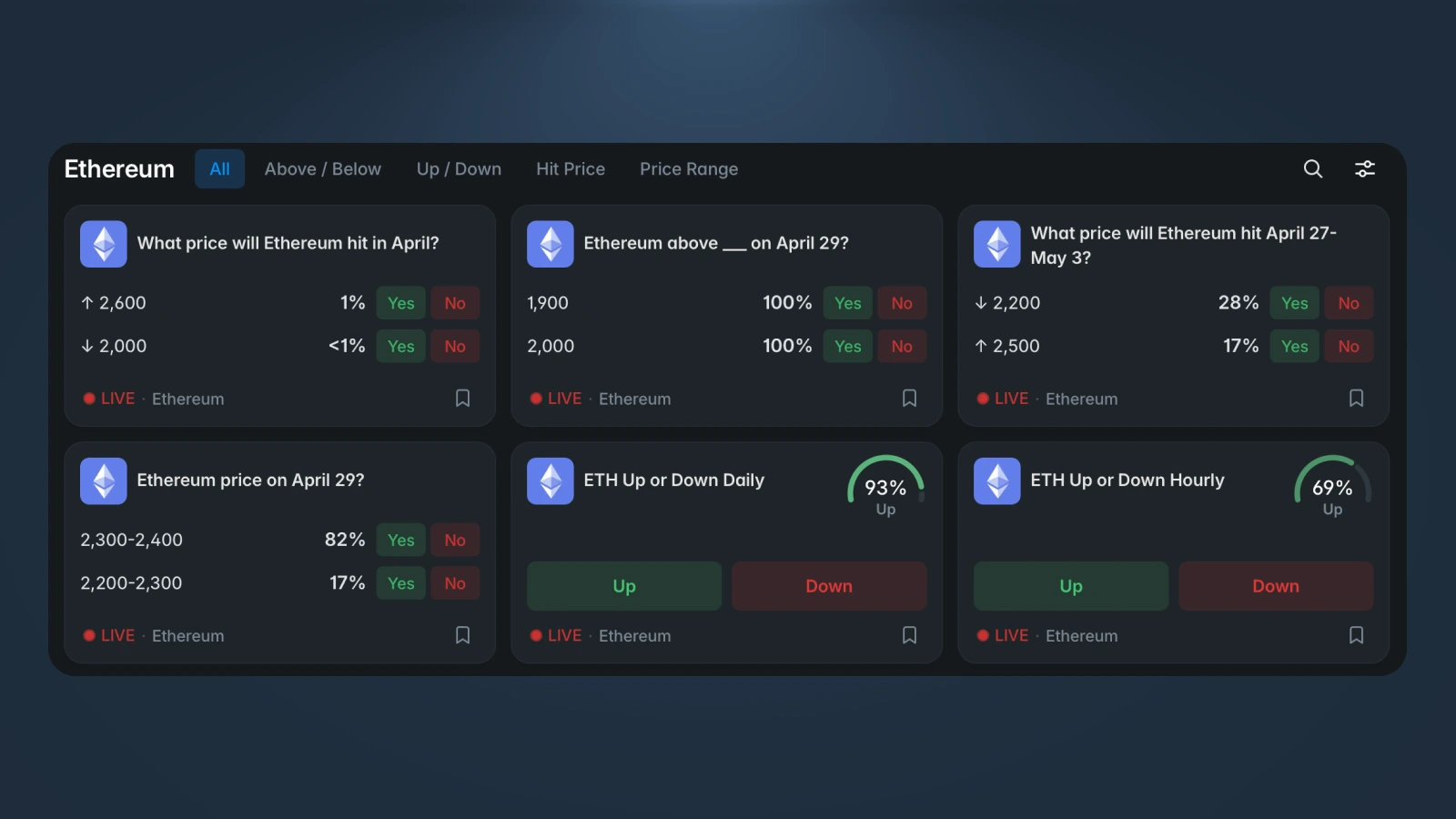
Each market is built around a clear question. In Ethereum-related markets, that could be a price level, a timeline, or an event tied to the network. Every outcome has two sides, yes and no, and each side has a price between 0 and 1. That price reflects how the market currently values the probability of that outcome.
What makes this system different is that positions are not locked. If the market moves in your favor, you can exit early. If expectations shift, you can reduce exposure or close the position entirely. This creates a trading environment where value comes not only from being right at the end, but from how the probability changes over time.
Because Polymarket is non-custodial, users connect a wallet and keep control over their assets while interacting with markets.
How Ethereum Markets Work on Polymarket
Ethereum markets on Polymarket are structured around both price scenarios and network-driven events. This is where they begin to differ from simpler “price-only” assets.
Some markets focus on levels, such as whether ETH will reach a certain price within a given timeframe. Others are tied to developments in the ecosystem, including upgrades, scaling milestones, or broader adoption trends.
In both cases, the mechanics are the same. Users trade positions based on probability, and prices update continuously as new information enters the market. If sentiment shifts — whether due to technical updates, macro conditions, or changes in the crypto landscape — the market adjusts.
This makes Ethereum markets more dynamic than static betting formats. Instead of committing to a single view, users can respond to how narratives evolve, which is often a major driver of ETH price movements.
Why Ethereum Markets Are More Than Just Price
Ethereum is not only traded as an asset. It is an evolving network, and that changes how markets around it behave.
Price still matters, but it is often a result of underlying activity. Upgrades, changes in network usage, scaling developments, and broader ecosystem growth can all shift expectations before they are fully reflected in price.
Because of this, Ethereum markets tend to be more narrative-driven. Traders are not only asking where ETH will trade, but why it might move. A new upgrade, increased adoption, or a shift in developer activity can quickly change how outcomes are priced.
This creates a different type of market. Instead of focusing purely on direction, users engage with scenarios tied to how the Ethereum ecosystem develops over time.
Ethereum Betting vs Prediction Trading
At a glance, Ethereum betting and prediction markets may look similar. Both involve taking a position on an outcome. The difference is in how that position behaves.
Traditional betting platforms are built around fixed outcomes. You choose a side, accept the odds, and wait for resolution. Once the position is placed, there is little room to react.
Prediction markets operate differently. The position itself has a price that moves as the market reassesses probability. This allows users to adjust exposure, exit early, or respond to new information.
The distinction becomes clearer when comparing the structure:
Why Traders Use Polymarket for Ethereum
Ethereum markets tend to move on narratives as much as on price. Upgrades, ecosystem growth, and shifts in sentiment can all change expectations before they are fully reflected in charts. Prediction markets allow traders to act on those expectations directly.
One of the main reasons users choose Polymarket is flexibility. Instead of holding ETH through volatility, they can take positions on specific scenarios and adjust them as conditions change. This is especially useful around events where direction is uncertain but market reaction is likely.
Another factor is how quickly markets respond. Prices update continuously as participants react to new information, creating a real-time view of how the market is pricing an outcome. For traders who follow Ethereum closely, this makes it easier to engage with changes as they happen rather than waiting for confirmation.
Risks of Ethereum Prediction Trading
Ethereum prediction markets introduce risks that are different from simply holding ETH or trading on traditional platforms.
Volatility is one of the main factors. Because markets are tied to both price and events, probabilities can shift quickly when new information appears.
Narratives can also change direction. An upgrade that is expected to be positive may have a different impact once details are released, which can move markets unexpectedly.
Liquidity varies depending on the market. Larger Ethereum markets tend to have stronger participation, while more specific event-based scenarios may have thinner activity, affecting pricing and execution.
Timing plays a role as well. Since positions can be entered and exited at any point, results depend not only on being correct about the outcome, but also on when the position is managed.
Wallets, Privacy, and Control in Polymarket
On Polymarket, every interaction runs through a wallet, which means activity is tied to a public address. Over time, that address can reflect how a user trades — what markets they enter, how early they take positions, and how they react to changes.
In Ethereum markets, where many positions are driven by narratives and timing, this visibility can matter. Strategies are not just about the final outcome, but about when and how positions are adjusted.
Using a solution like Atomic Wallet allows users to structure that interaction with more control. By separating how assets are stored from how trading activity is executed, it becomes harder to link everything to a single address over time.
This does not remove transparency, but it changes how easily patterns can be observed, which can be relevant for users who actively trade Ethereum-related scenarios.
Crypto Betting Apps vs Prediction Markets
Crypto betting apps and prediction markets are often grouped together, but they follow different models.
Betting platforms are built around fixed outcomes. The user chooses a side, accepts the odds, and waits for the result. The structure is simple but limits how positions can be managed.
Prediction markets operate as open systems. Prices move continuously, and users can adjust positions as the market changes. This allows for a more active approach, where value comes from how probabilities shift over time rather than just the final outcome.
For Ethereum, this distinction is important. The asset is influenced by ongoing developments, and a model that allows users to respond to those changes is often a better fit than a static betting format.
Conclusion: Trading Ethereum Markets on Polymarket
Polymarket offers a way to engage with Ethereum that goes beyond simple price direction. Instead of placing fixed bets, users interact with markets that price both outcomes and the narratives behind them.
This is especially relevant for Ethereum, where expectations are often shaped by upgrades, ecosystem activity, and broader adoption. Prediction markets allow those factors to be reflected directly in price, creating a system where users can respond as conditions evolve.
At the same time, participation is not only about choosing outcomes. Because everything is wallet-based, how activity is structured becomes part of the process. Positions, timing, and behavior are all visible over time.
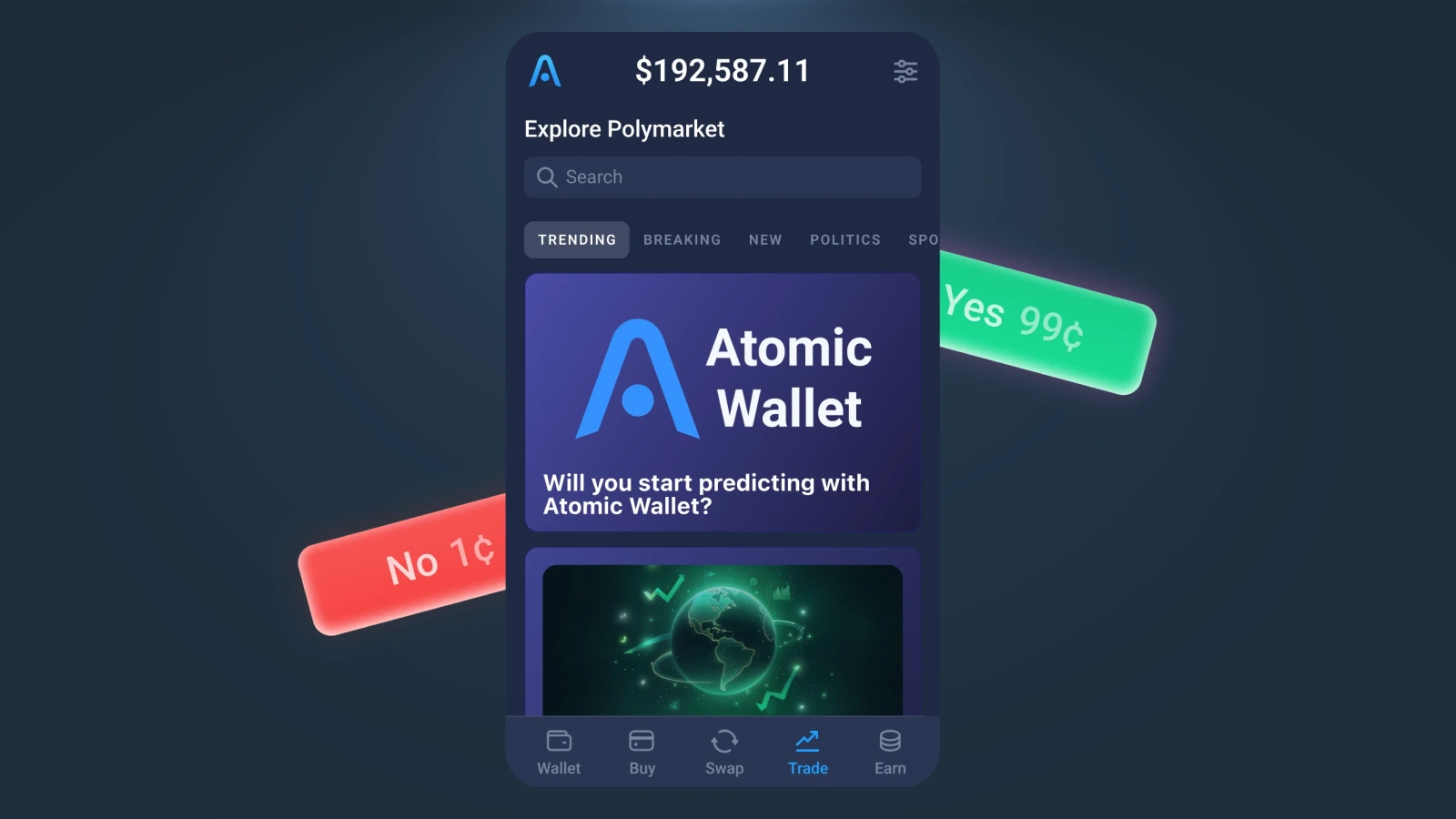
Using tools like Atomic Wallet allows users to manage that interaction with more control, separating core holdings from active trading activity.