Wallet-as-a-Service vs. Wallets: What Enterprises Actually Need
As stablecoins move from experiments into real payment flows, wallets are no longer just a technical detail. For enterprises, wallet architecture now defines how users onboard, how funds are controlled, how risks are managed, and how operations scale. What once looked like an implementation choice has become a core product and payments decision.
This is where confusion often starts. Many teams talk about “using a wallet” without realizing that consumer wallets and Wallet-as-a-Service solve fundamentally different problems. Choosing the wrong model early can quietly limit growth later.
Why Wallet Architecture Matters for Payments Teams Today
Stablecoins are increasingly used in production environments: payouts, cross-border transfers, treasury flows, embedded financial features. Once money starts moving at scale, wallet design stops being a developer preference and becomes part of the payments stack.
When choosing between Wallet-as-a-Service and traditional consumer wallets, compatibility with high-performance blockchain networks — such as Polygon, known for fast, low-fee transactions — is an important consideration.
For payments teams, wallet architecture affects more than key storage. It determines how accounts are created, who controls funds, how transactions are approved, how errors are handled, and how the system stands up to audits and compliance reviews. A wallet choice directly shapes onboarding friction, operational overhead, and risk exposure.
In other words, wallets are no longer just about holding crypto. They are about how a payments product actually functions in the real world.
Two Different Things People Call a “Wallet”
In payments conversations, the word “wallet” is often used too loosely. Teams may think they are discussing the same concept, while in reality they are referring to fundamentally different architectures with very different implications.
In practice, “wallet” usually means one of two things:
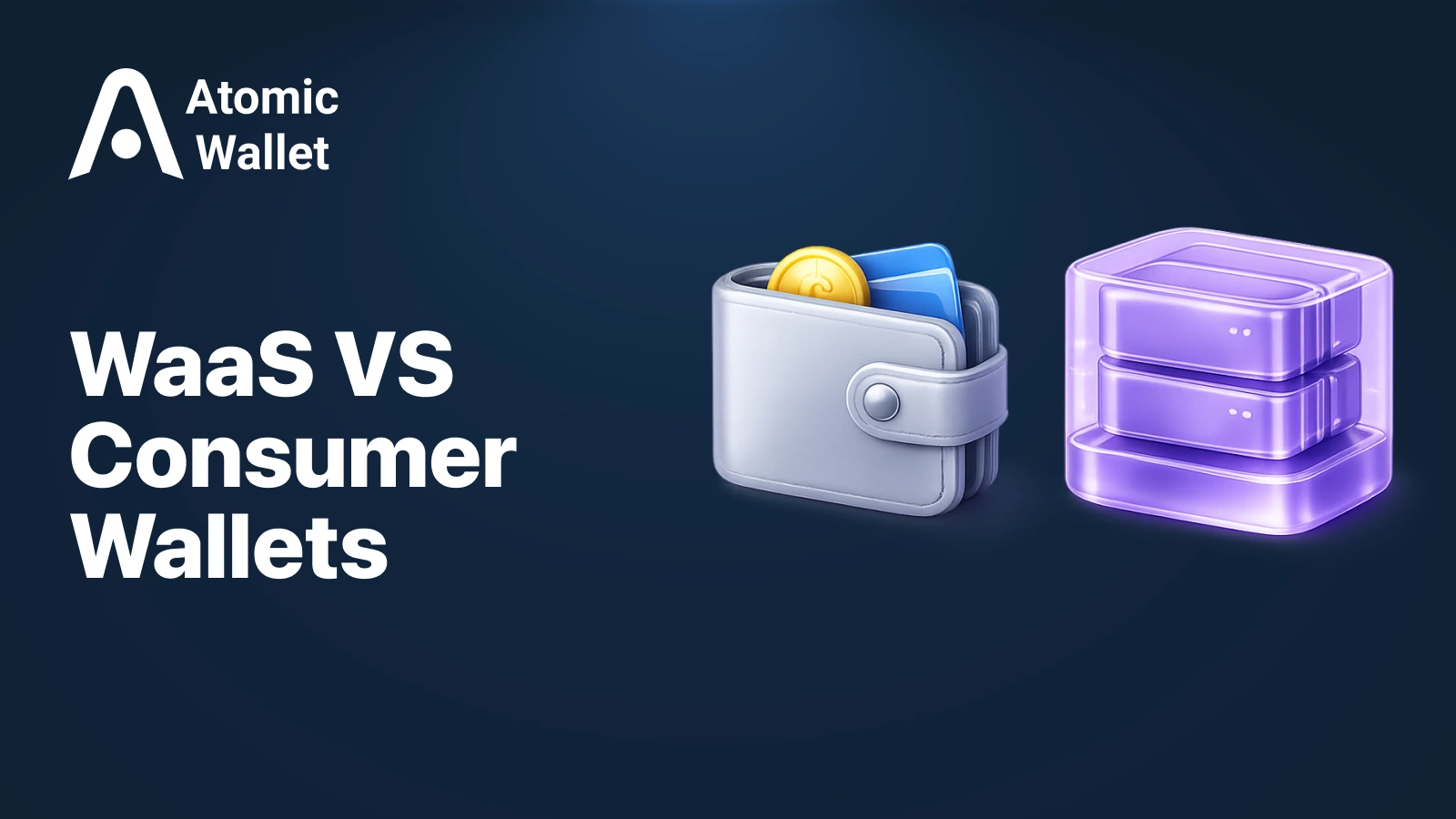
- Consumer wallets: Designed for individual users who want direct control over their funds. These wallets prioritize self-custody, portability, and user-managed security.
- Wallet-as-a-Service: Designed as embedded, programmatic components of a product’s infrastructure. Wallets are created, managed, and governed by the platform rather than by individual end users.
Although both are called “wallets,” they solve different problems and are built for different use cases. Understanding this distinction early helps teams avoid evaluating the right solution against the wrong requirements.
What Consumer Wallets Are Designed For
Consumer wallets were originally created to support self-custody. Their primary goal is to give individuals full ownership and control over their assets, without relying on intermediaries. This model works well for crypto-native users who are comfortable managing keys, signing transactions, and taking full responsibility for security.
These wallets excel in environments where portability and autonomy matter most. Users can move funds freely, connect to decentralized applications, and operate independently of any single platform. For individuals who value sovereignty and flexibility, consumer wallets remain a powerful and appropriate choice.
However, the same design principles that make consumer wallets ideal for individuals introduce limitations when applied to enterprise payment systems.
Why Consumer Wallets Don’t Scale for Enterprise Payments
Consumer wallets are optimized for individual control, not organizational workflows. As soon as payments move beyond small pilots, teams run into friction that isn’t obvious at the prototype stage.
Power-user design breaks down in production environments. Onboarding becomes manual and inconsistent. There is no native concept of roles, approvals, or policy-based controls. Recovery flows are fragile. Support teams cannot reliably help users who lose access. Audits, reporting, and reconciliation require custom workarounds. What works for a single user with one wallet does not translate cleanly to thousands of users, automated payouts, or treasury operations.
For enterprise payments, these gaps quickly turn into operational risk.
What Wallet-as-a-Service Means in Practice
Wallet-as-a-Service treats wallets as infrastructure rather than end-user tools. Instead of asking users to bring their own wallets, the product programmatically creates and manages wallets as part of its system.
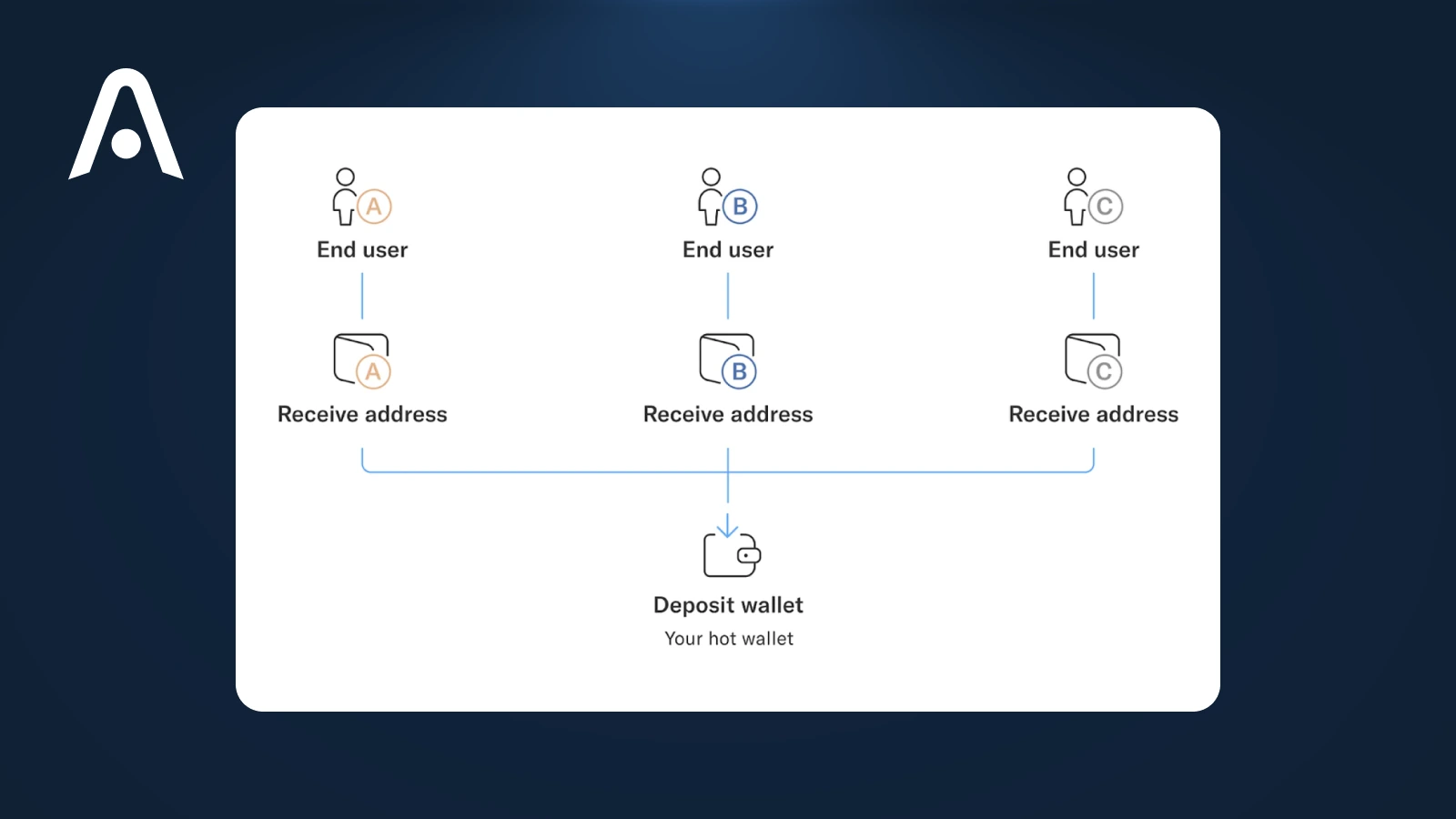
In practice, this means wallets are embedded, API-driven accounts. They can be created on demand, linked to users or entities, governed by rules, and monitored in real time. Key management, transaction policies, and lifecycle events are handled at the platform level rather than pushed onto end users.
This shift changes how products handle funds. Wallets become part of the payments architecture, not an external dependency, enabling teams to design flows that are predictable, auditable, and scalable from day one.
How WaaS Impacts User Experience, Control, and Operations
Wallet-as-a-Service changes the payments experience at a structural level. Instead of pushing blockchain complexity onto users, WaaS shifts responsibility into the product layer, where it can be managed consistently and at scale.
From User Friction to Operational Design
For users, WaaS removes much of the complexity associated with managing keys, signing transactions, or understanding blockchain mechanics. Onboarding can follow familiar account creation flows, while wallets are provisioned automatically in the background.
For operations teams, the impact is even more significant. WaaS enables policy-based controls, role separation, transaction limits, approvals, and monitoring to be built directly into the system. Funds can be managed with clear ownership rules, predictable recovery processes, and consistent audit trails. Instead of reacting to edge cases, teams can design for them upfront.
The result is a wallet model that aligns with how modern payments products are actually built and operated in production environments.
Key Tradeoffs Enterprises Need to Evaluate
For enterprises, the choice between consumer wallets and Wallet-as-a-Service comes down to operational priorities. Each model optimizes for a different balance between control, scalability, user ownership, and risk management. Understanding these tradeoffs is critical before committing infrastructure to production.
Common Mistakes When Building Onchain Payment Flows
Many onchain payment products struggle not because the technology is immature, but because early architectural decisions fail under real-world conditions. What works in a controlled pilot often breaks once real users, real volume, and real compliance requirements enter the picture.
The most common mistakes include:
- Manual wallet management: Processes that rely on manual setup or intervention do not scale and quickly become operational bottlenecks.
- Assuming users will manage keys securely: Expecting end users to handle key storage and recovery correctly introduces support risk and fund loss scenarios.
- Delaying controls and governance: Approvals, transaction limits, monitoring, and role separation are often added too late, after issues emerge.
- Underestimating audit and reconciliation complexity: Payment flows require clear records, ownership models, and traceability that are difficult to retrofit later.
- Lack of recovery and exception handling: Missing procedures for lost access, failed transactions, or disputed flows creates long-term operational risk.
These issues are rarely visible at launch, but they surface quickly once payments become business-critical and scale exposes architectural weaknesses.
How to Choose the Right Wallet Model for Enterprise Payments
Choosing the right wallet architecture starts with understanding the product’s goals rather than the underlying technology. Teams should consider who the users are, how funds move, and what level of control and compliance the business requires.
For products focused on individual power users and maximum portability, consumer wallets may be sufficient. For platforms handling payments at scale, managing user balances, or operating under regulatory scrutiny, Wallet-as-a-Service often aligns better with operational reality. The decision should reflect long-term requirements around governance, risk, and growth, not just short-term development speed.
Atomic Wallet works with teams and users across the onchain ecosystem, providing self-custodial tooling and infrastructure-ready components that support secure asset management and real-world payment flows. Whether you are evaluating wallet models or building for scale, understanding the tradeoffs early makes the difference between a pilot and a production system.
Atomic Wallet works with teams and users across the onchain ecosystem, providing self-custodial tooling and infrastructure-ready components that support secure asset management and real-world payment flows.