What Are Memecoins? Meaning, Value and Risks
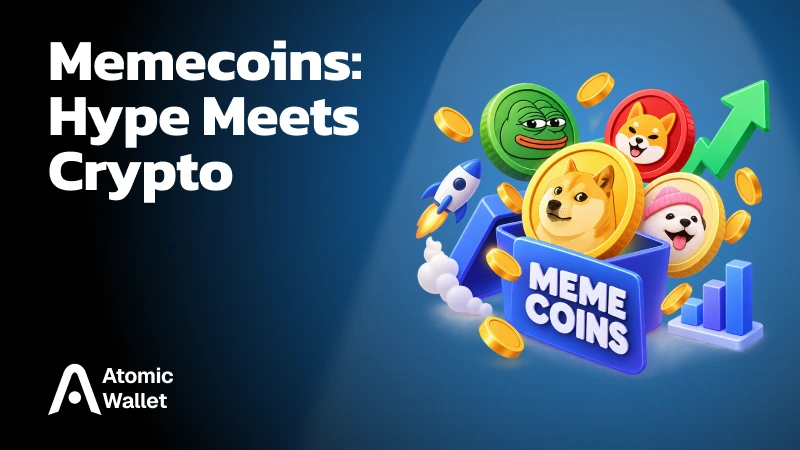
Memecoins are crypto assets whose value is driven primarily by internet culture, community attention, and speculation rather than by a specific technological function or claim on cash flows.
A memecoin can start with a dog, frog, celebrity, political event, viral phrase, or almost any other recognizable idea. If enough people want to trade that idea onchain, it can develop a market.
That does not mean every memecoin is technically the same. Dogecoin has its own blockchain, while tokens such as SHIB, PEPE, and many newer memecoins run on existing networks such as Ethereum or Solana. What connects them is not their code but the role culture and attention play in creating demand.
Memecoins are also not automatically scams or “worthless” assets. Some remain almost entirely speculative, while others develop payment use cases, apps, communities, or broader ecosystems. The defining feature is that the meme or cultural narrative is usually the starting point.
This also explains their unusual risk profile. When attention can create demand quickly, it can disappear just as quickly. Prices can rise dramatically without a comparable change in underlying functionality — and collapse when the narrative loses momentum.
What Makes a Crypto a Memecoin?
A cryptocurrency becomes a memecoin because its identity and initial demand are built around a meme, cultural narrative, or community rather than because it uses a particular blockchain technology.
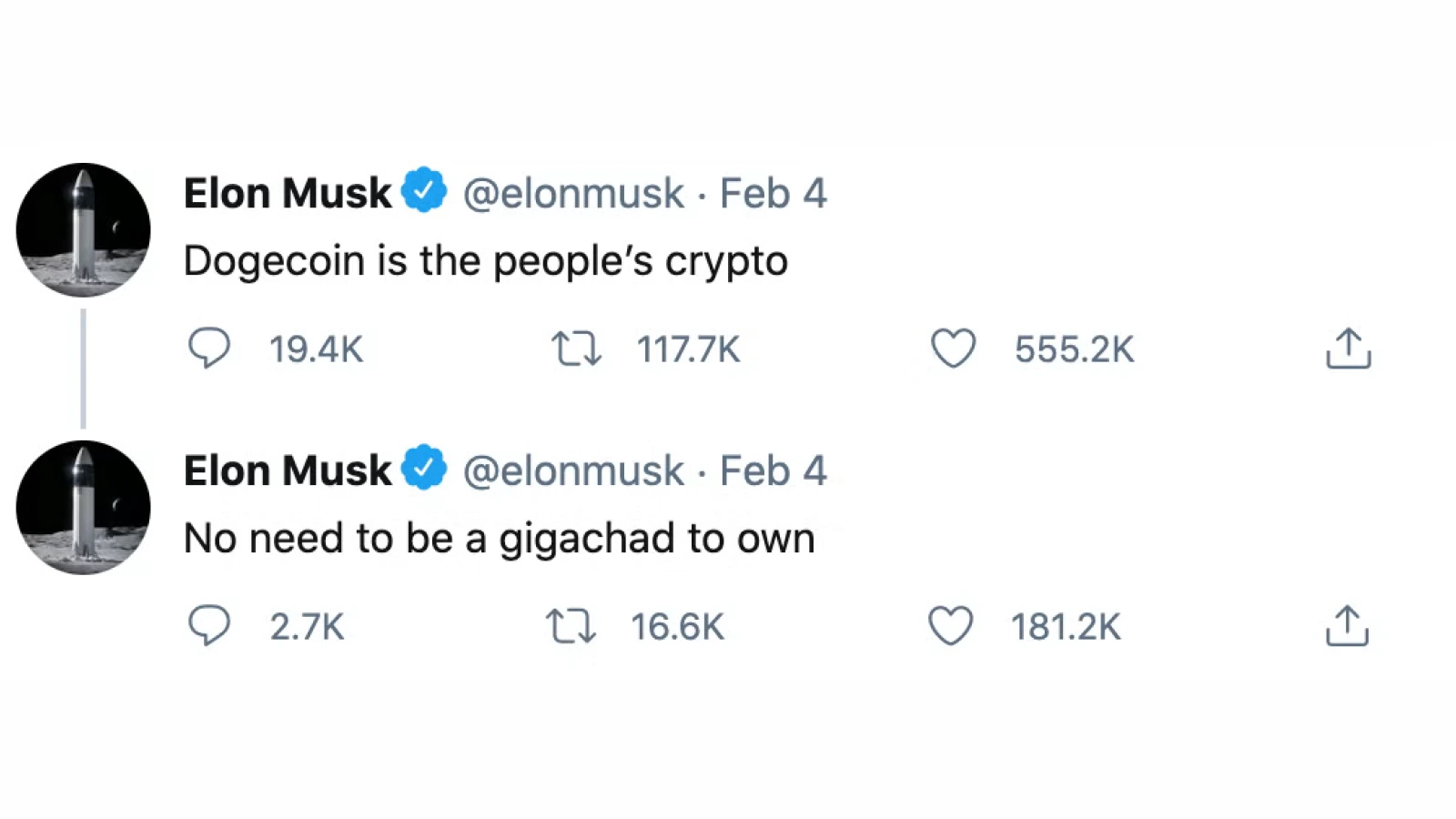
Dogecoin established the model in 2013. Billy Markus and Jackson Palmer launched DOGE as a lighthearted response to the increasingly serious and speculative crypto industry, combining cryptocurrency with the viral Doge meme. What began as a joke quickly developed a community and was used for tipping on platforms such as Reddit.
Since then, the category has expanded far beyond dog-themed coins. Current meme markets include cat tokens, frog memes, AI memes, celebrity-themed coins, political tokens, anime themes, and assets built around short-lived internet trends. CoinGecko was tracking more than 1,000 dog-themed coins alone by May 2026, alongside hundreds of cat, AI-meme, political, and other subcategories.
Despite the variety, most memecoins share several characteristics:
- Narrative comes first — The token is built around an idea people can immediately recognize and share
- Community is part of the product — Social activity, memes, creators, and holders help distribute the narrative
- Attention strongly affects demand — Viral posts, news, influencers, or cultural events can rapidly change trading activity
- Traditional valuation anchors are limited — Many memecoins do not start with revenue, cash flows, or a protocol whose usage can be valued
- Entry barriers are low — Modern token launch platforms allow new memecoins to be created and traded with little technical work
A memecoin can still develop utility later. Dogecoin itself evolved from a joke into a functioning payment network with its own blockchain and active development, while other meme projects have added DeFi, games, payments, or governance.
So the useful distinction is not “memecoin versus real cryptocurrency.” Memecoins are real crypto assets. What makes them unusual is where their demand begins: with culture and attention rather than utility-first fundamentals.
Why Do Memecoins Have Value?
Memecoins gain value when attention, community, and speculation create demand for a limited supply of tradable tokens.
Unlike a stock, a typical memecoin does not represent a claim on company earnings. Unlike many DeFi tokens, it may not begin with protocol fees, governance rights, or demand tied to a specific service. Its market can instead form around something less tangible but still scarce: attention.
A viral post, cultural moment, celebrity mention, exchange listing, or rapidly growing community can bring new buyers into the market. As the price rises, the token can appear on trending lists and social feeds, attracting another wave of traders. The price movement itself becomes part of the marketing.
Galaxy Research describes memecoin trading as a form of “cultural arbitrage”: traders try to identify an internet trend or narrative before the broader market focuses on it.
Community plays a particularly important role in this model. Holders create memes, posts, videos, chats, and other content that can expand the token’s reach without a traditional marketing organization. For a culture-driven asset, the community can effectively become both the audience and the distribution network.
That does not mean attention guarantees lasting value. Internet narratives are easy to copy and can disappear overnight. With few traditional valuation anchors, a memecoin can move dramatically in either direction based on relatively small changes in demand.
The attention effect can be enormous. CoinGecko found that average daily memecoin trading volume jumped 767% from $1.1 billion in 2023 to $9.7 billion in 2024, briefly reaching $87.4 billion during one peak trading day.
How Are Memecoins Created and Traded?
Modern launchpads have made it possible to create and begin trading a memecoin almost instantly, shifting the main challenge from creating a token to attracting enough attention and liquidity for it to survive.
A memecoin can still be launched conventionally by deploying a token contract and creating a liquidity pool on a decentralized exchange. But launchpads have dramatically simplified the process.
Pump.fun shows how the newer model works. As of 2026, creating a coin on the platform carries no creation fee, and every new coin begins trading immediately on a bonding curve rather than waiting for a traditional order book or manually seeded liquidity pool.
The basic flow is:
- Create the token — A creator chooses the name, ticker, image, and other basic information
- Start on the bonding curve — The platform automatically provides a market where users can buy and sell
- Demand moves the price — On Pump.fun, each purchase pushes the curve price higher and each sale pushes it lower
- Reach the graduation threshold — If sufficient demand develops, the bonding-curve phase ends
- Migrate liquidity to a DEX — Pump.fun automatically moves graduated coins to a PumpSwap liquidity pool for continued open-market trading
This model solves a major problem that once made token launches harder: a brand-new coin had no natural market, price, or liquidity. The launchpad provides all three from the beginning.
The result has been an explosion in token supply. Galaxy found that Solana went from fewer than 8 million tokens before Pump.fun launched in January 2024 to more than 32 million by late 2025, with roughly 12.9 million originating from Pump.fun alone.
That changes the economics of memecoins. Creating another token is no longer scarce. Capturing attention is.
And being easy to launch does not make a token vetted or valuable. Pump.fun itself warns that platform support does not constitute endorsement or due diligence on an asset.
A modern memecoin therefore competes on several fronts at once: narrative, community, distribution, liquidity, timing, and visibility. Millions can be created; only a tiny fraction sustain enough demand to remain relevant.
Memecoin Price, Market Cap, and Liquidity
A low token price does not mean a memecoin is cheap, and a high market cap does not mean the same amount of money has been invested in it.
These numbers measure different things:
- Price — What one token currently trades for
- Market cap — Current price multiplied by circulating supply
- FDV — Current price multiplied by the total or maximum supply
- Liquidity — The capital available for buyers and sellers to trade against
- Volume — The value traded over a given period
Consider a memecoin with 1 trillion tokens in circulation:
1,000,000,000,000 × $0.001 = $1 billion market cap
At $0.001 per token, it may look inexpensive. But reaching $1 would imply a $1 trillion market cap if the circulating supply remained unchanged. The number of zeros in the token price tells you very little without the supply.
Market cap can be misleading in another way. A $1 billion market cap does not mean buyers deposited $1 billion into the token. Market cap applies the latest market price across every circulating token, including tokens that did not trade at that price.
Liquidity determines how realistic that price is for a larger position. In a thin liquidity pool, relatively small purchases can push the marginal price sharply higher and create a large headline market cap. But trying to sell a large position can move the price sharply in the opposite direction.
That difference is price impact. A trader may see a token quoted at $0.001, but there may not be enough liquidity to sell millions of tokens anywhere near that price.
This is especially important with memecoins because extremely large supplies and tiny unit prices are common. A useful question is therefore not:
“Could this $0.000001 coin reach $1?”
It is:
“What market cap would $1 require, and is there enough liquidity and demand to support anything close to that valuation?”
Why Do Most Memecoins Fail?
Most memecoins fail because creating a token is easy, while sustaining attention, buyers, and liquidity is extremely difficult.
The scale of the imbalance is striking. Galaxy Research analyzed roughly 12.8 million Pump.fun tokens and found that just 12 tokens — about 0.00009% — accounted for more than 55% of their combined fully diluted market cap. The remaining value was spread across millions of other launches.
This creates a powerful survivorship bias. Traders repeatedly see DOGE, SHIB, PEPE, BONK, and a handful of other extraordinary winners. They rarely see the millions of tokens that launched, attracted little lasting interest, and disappeared from active trading.
Memecoin volatility is not limited to obscure tokens. The entire category fell from a $150.6 billion peak in December 2024 to roughly $34 billion by October 7, 2026 — a decline of about 77%.
A memecoin can fail for several reasons:
- The meme stops spreading — Social attention moves to a newer narrative
- New buyers disappear — Without fresh demand, early holders compete to exit
- Liquidity dries up — Larger sales cause increasingly severe price impact
- Large holders sell — Concentrated ownership can overwhelm available demand
- Another token captures the narrative — Meme markets have extremely low switching costs
- Short-term traders dominate — Participants may enter only to capture a quick move rather than build a lasting holder base
Galaxy found that the median holding time for the Solana tokens it studied had fallen to roughly 100 seconds for wallets that bought and fully exited within seven days, highlighting how short-term parts of the market have become.
None of this means every failed memecoin was a scam. A token can collapse simply because demand disappeared. A rug pull, honeypot, or coordinated pump-and-dump involves a different mechanism and should not be inferred from a falling price alone.
That distinction matters in a market where millions of tokens compete for the same limited resource: attention.
Main Risks of Memecoins
Memecoins combine ordinary crypto risks with extreme volatility, thin liquidity, concentrated ownership, automated trading, and a market where hype can be easier to manufacture than genuine demand.
The biggest risks include:
- Extreme volatility — Prices can move sharply because demand is often driven by short-lived narratives rather than stable usage
- Low liquidity — A token can show a large market cap while offering little depth for holders trying to sell
- Holder concentration — A few wallets controlling a large share of supply can create major sell pressure with a single exit
- Snipers and bundlers — Bots or coordinated wallets may acquire significant supply immediately after launch, even when a token is advertised as a fair launch
- Wash trading — Repeated trading between related wallets can make volume and market activity appear stronger than they really are
- Contract permissions — Mint, freeze, blacklist, transfer, or other administrative controls can give creators powers that ordinary holders do not have
- Copycat tokens — Names, tickers, and images can be duplicated, making it easy to buy a different token from the one gaining attention
- Influencer-driven demand — A viral post can send buyers into a market quickly, but the same attention can disappear just as fast
- Bots and MEV — Automated traders can react faster than retail users and may worsen execution around highly active launches
A “fair launch” does not eliminate these risks. It may mean there was no private presale or formal team allocation, but it does not prove that ownership became evenly distributed.
Early wallets can still accumulate supply through bots, coordinated purchases, or multiple connected addresses. Galaxy Research found that snipers and bundlers have become a significant part of Solana memecoin launches, making visible holder counts less informative without looking at how those wallets acquired their tokens.
Memecoin manipulation is becoming industrialized. A 2026 academic study covering 15 million Pump.fun coins identified automated wash trading, coordinated selling, creator-address obfuscation, copycats, and social-media manipulation — including third-party tools that effectively offer “market manipulation as a service.”
The practical takeaway is simple: a strong chart, high volume, large community, or “fair launch” label is only one signal. None of them proves that a memecoin is safe or genuinely distributed.
Memecoin vs. Rug Pull, Pump-and-Dump, and Honeypot
A memecoin is a type of crypto asset, while a rug pull, pump-and-dump, and honeypot describe different ways a token or market can be manipulated or used to extract value from traders.
The terms are often mixed together, but they are not interchangeable:
A memecoin can fall 95% without being any of these. If interest disappears and holders voluntarily sell into a shrinking market, the result may be disastrous for buyers, but a price crash alone does not prove fraud.
The opposite is also true: manipulation does not always look like a classic rug pull. A token can retain liquidity while connected wallets wash trade it, influencers manufacture demand, insiders distribute holdings across multiple addresses, or contract logic quietly gives certain wallets advantages.
That is why “the liquidity is still there” is not enough to prove a token is safe.
The useful distinction is:
Memecoin describes what the asset is. Rug pull, pump-and-dump, and honeypot describe what someone may do with it.
Understanding that difference helps separate ordinary speculative failure from deliberate manipulation — and makes it easier to investigate the specific warning signs behind a suspicious token.
How to Evaluate a Memecoin Before Buying
Evaluating a memecoin means checking whether its liquidity, token distribution, trading activity, and contract permissions support the story being presented by its chart and community.
Start with the token itself, not its name or ticker. Copycat memecoins can use identical branding, so verify the exact contract or mint address through the project’s official channels and a reputable blockchain explorer.
Then check the factors that can materially affect your ability to buy, hold, and exit:
- Liquidity — Look at the actual liquidity available for the trading pair, not just market cap. Thin liquidity can make a large position difficult to sell without severe price impact
- Holder concentration — Check how much supply the largest wallets control. Several apparently separate addresses may still belong to the same creator or coordinated group
- Creator and early wallets — Look for large early allocations, rapid transfers, coordinated buying, or wallets that accumulated supply before broader traders arrived
- Token authorities — Determine whether someone can still mint additional supply, freeze accounts, pause transfers, blacklist holders, or modify other critical settings
- Trading activity — High volume is more convincing when it comes from many independent wallets rather than repeated transactions between a small group of addresses
- Buy and sell activity — Confirm that unrelated holders are actually able to sell. A rising chart alone does not prove that normal exits are possible
- Liquidity control — Check who controls liquidity and whether it can be removed or changed
- Social activity — Followers and engagement can be purchased or coordinated. Compare social hype with actual holder growth, liquidity, and onchain activity
Permissions require particular attention on networks such as Solana. A token can retain a mint authority, which can create additional units, and a freeze authority, which can prevent individual token accounts from transferring their balances. Those authorities can also be permanently revoked.
None of these features is automatically malicious. Legitimate assets may use administrative controls for specific reasons. What matters is whether the permissions exist, who controls them, and whether that matches what the project tells holders.
The same applies to a fair launch. No presale or team allocation may reduce one type of insider advantage, but it does not guarantee fair distribution. Bots, snipers, coordinated wallets, and connected addresses can still accumulate large positions immediately after trading begins.
So avoid treating any single signal as proof of safety. Locked liquidity, a renounced authority, high volume, many holders, or a large community can each reduce one concern while leaving others untouched.
Are Memecoins Regulated?
Memecoin regulation depends on the jurisdiction and the specific rights, functionality, and way a token is offered, so “memecoin” is not itself a universal legal classification.
In the United States, the SEC issued a broader crypto-asset interpretation in March 2026, with related CFTC guidance, that specifically addresses meme coins. The interpretation became effective on March 23, 2026.
Under that framework, the SEC describes a typical meme coin as a crypto asset inspired by memes, characters, current events, or trends and generally acquired for artistic, entertainment, social, or cultural purposes. Its value is described as being driven primarily by supply and demand rather than essential managerial efforts by another party.
The Commission places meme coins fitting those characteristics within its digital collectibles category and states that a digital collectible, as described in the interpretation, is not itself a security. However, the broader framework also makes an important distinction: a non-security crypto asset can still be offered or sold as part of an investment contract, depending on the surrounding promises and transaction structure.
The category can also change over time. The SEC explicitly notes that a token may begin as a meme coin with little or no functionality and later become a digital commodity if it becomes functional within an associated crypto system.
That makes blanket claims such as “memecoins are unregulated” or “all memecoins are securities” inaccurate. The U.S. framework is fact-specific, and rules in other jurisdictions can differ substantially.
If you decide to hold or trade memecoins, Atomic Wallet gives you self-custody control over your assets while keeping multiple cryptocurrencies in one place.