What Is Telcoin (TEL)? Price, Use Case, and How to Buy in 2026
Unlike many short-lived DeFi narratives, Telcoin is an older project that has resurfaced with a clearer regulatory and payments-focused positioning. Instead of chasing speculative yield, Telcoin has consistently emphasized real-world usage: cross-border payments, mobile-first remittances, and integration with traditional telecom infrastructure.
This renewed attention is driven less by hype cycles and more by regulatory progress, fintech licensing narratives, and a broader market shift toward utility-driven crypto projects. As a result, TEL has become actively traded again, especially around news events. The goal of this article is to explain what Telcoin actually is, how TEL price behaves, and how investors and traders can get exposure—either through spot purchases or more flexible trading instruments.
What Is Telcoin (TEL)?
Telcoin is a crypto-powered payments protocol designed to enable fast, low-cost mobile remittances, particularly in emerging markets. The project focuses on using blockchain as a settlement layer while abstracting complexity away from the end user, often through mobile wallets and phone-number-based identity flows.
Key characteristics of Telcoin include:
- a mobile-first approach to cross-border payments;
- integration concepts built around telecom operators and fintech rails;
- blockchain-based settlement rather than DeFi-native financial primitives;
- TEL as the utility token used within the Telcoin ecosystem to support payments and incentives.
Unlike Layer 1 platforms or DeFi protocols, Telcoin is not designed to be a general-purpose smart contract network. Its scope is narrower but more practical: enabling regulated, consumer-facing payment flows where crypto acts as infrastructure rather than a speculative product.
Telcoin Use Case — Mobile Payments & Remittances
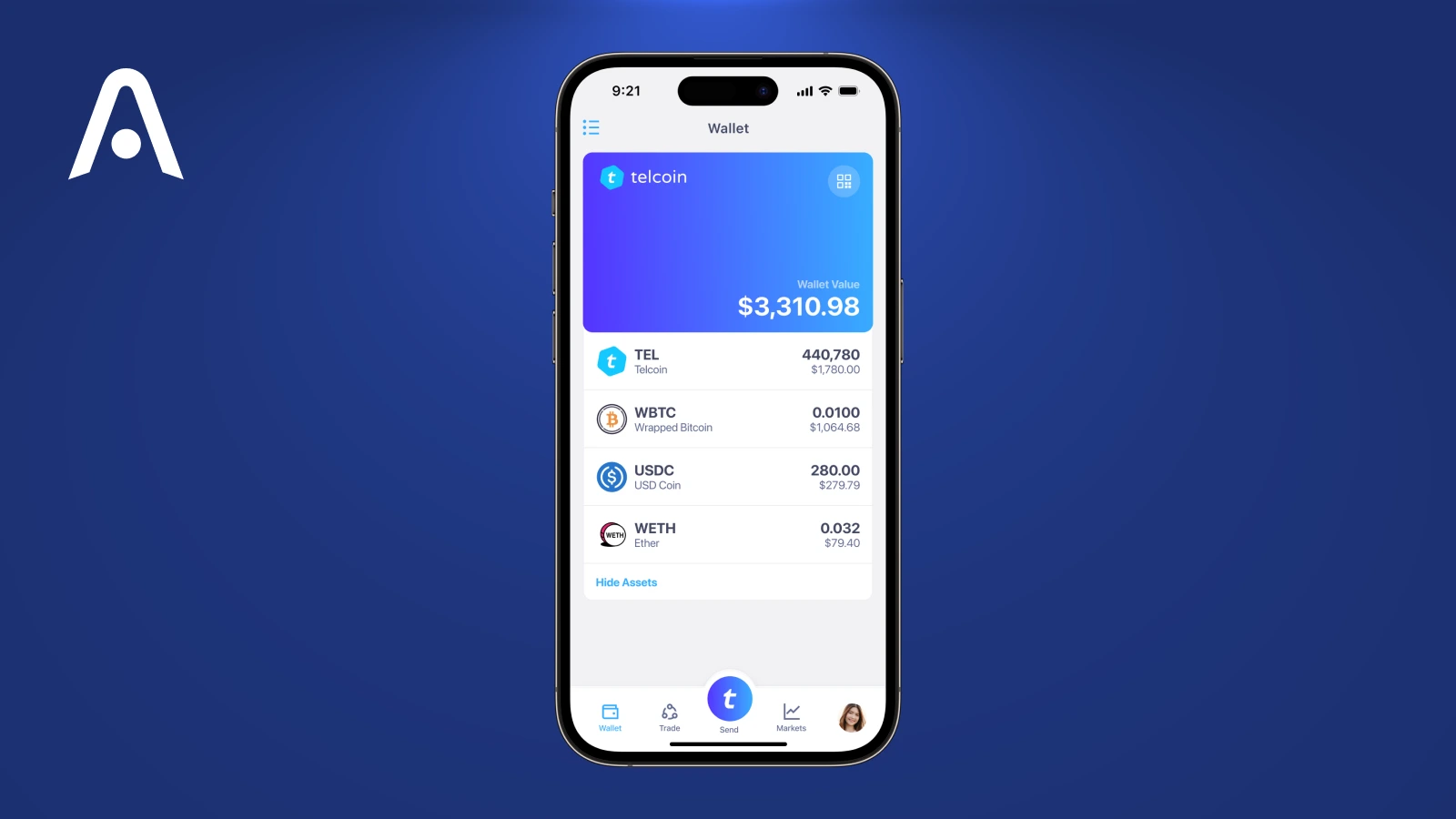
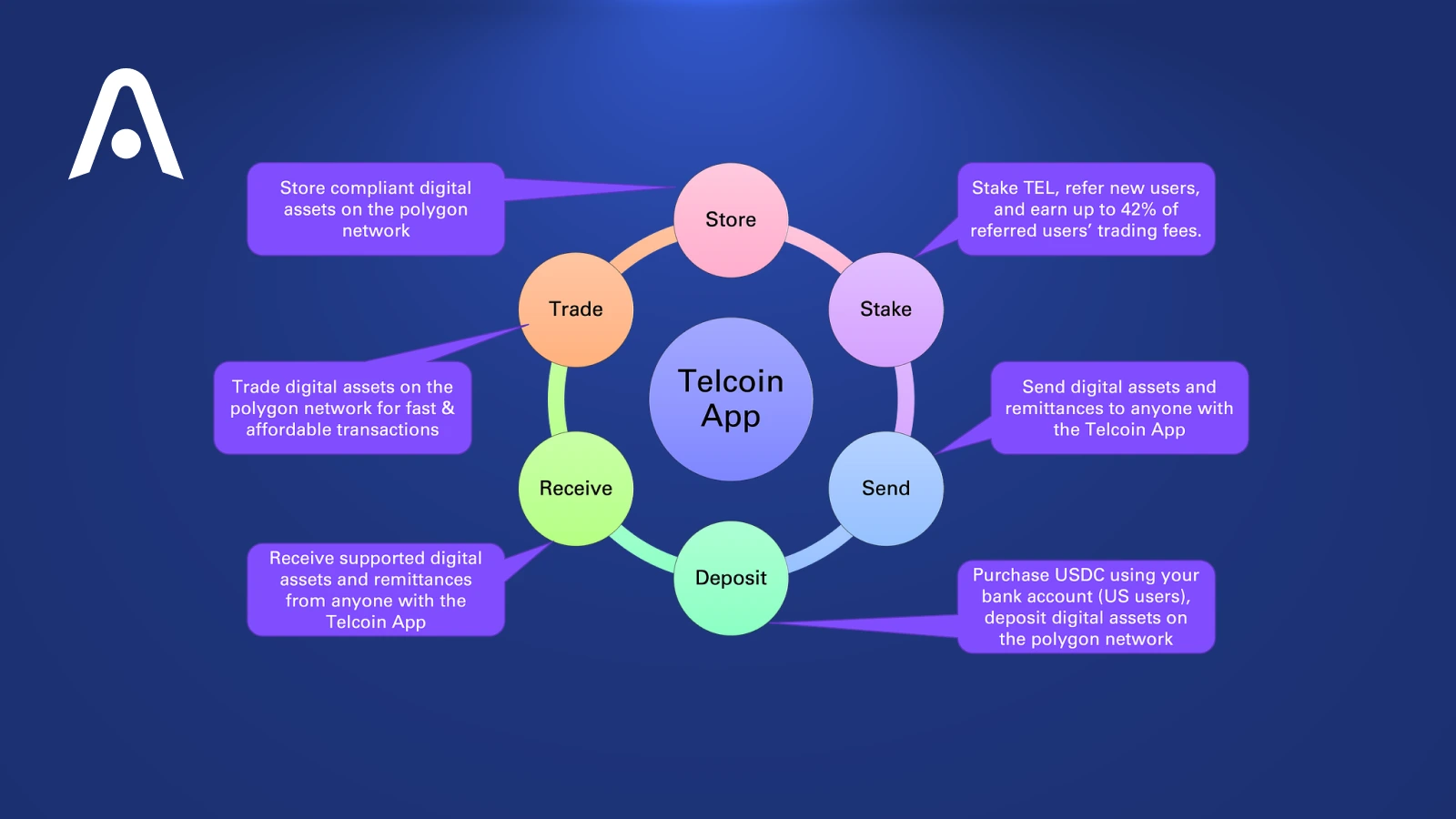
Telcoin’s core use case is cross-border mobile payments and remittances, with a clear focus on regions where traditional banking is expensive, slow, or inaccessible. Instead of building DeFi products, Telcoin positions itself closer to fintech infrastructure, using blockchain primarily as a backend settlement layer rather than a user-facing financial system.
The protocol is designed around mobile wallets and simplified user flows, often abstracting blockchain mechanics behind phone numbers and familiar mobile interfaces. This makes Telcoin especially relevant for emerging markets, where smartphone adoption is high but access to banking services remains limited. Unlike stablecoins such as USDC or USDT, which are general-purpose digital dollars, Telcoin focuses on regulated payment corridors and telecom-aligned distribution, prioritizing usability over composability.
Telcoin News — What’s Driving Attention in 2024–2025
Recent attention around Telcoin in 2024–2025 has been driven primarily by regulatory and infrastructure-related developments, rather than speculative DeFi trends. Market interest tends to spike around updates that suggest Telcoin is moving closer to compliant, real-world financial deployment.
Key themes behind recent Telcoin news include:
- progress toward regulatory clarity and licensing in select jurisdictions;
- narratives around a potential “Telcoin Bank” or regulated fintech entity;
- partnerships and technical upgrades focused on payments infrastructure;
- renewed discussion of telecom-based distribution models.
Because TEL has relatively low liquidity compared to major assets, even modest news flow can trigger sharp price reactions. This makes Telcoin especially sensitive to headlines, reinforcing its reputation as a news-driven trading asset rather than a slow-moving long-term compounder.
Telcoin Price Overview — How TEL Price Behaves
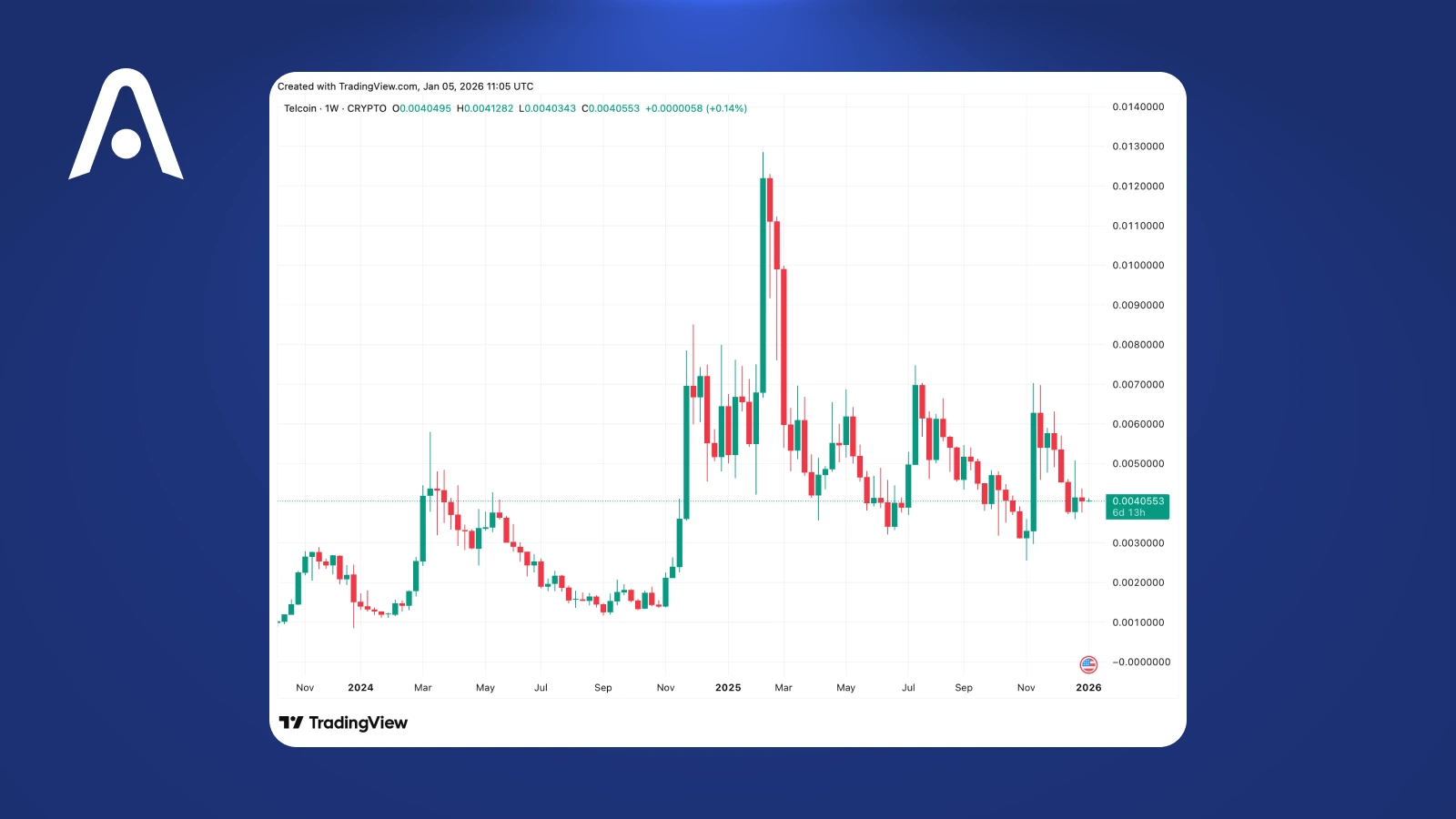
Historically, the Telcoin price has remained relatively low in absolute terms, punctuated by sudden and aggressive spikes. This behavior reflects TEL’s position as a low-liquidity, high-beta asset, where price discovery is driven less by steady fundamentals and more by narrative shifts and news catalysts.
TEL tends to react sharply to regulatory headlines and ecosystem announcements, while showing a weaker connection to DeFi cycles compared to other altcoins. At the same time, Telcoin does not move in isolation: broader Bitcoin market trends still influence TEL price direction, especially during risk-on or risk-off phases. As a result, Telcoin often trades in long consolidation ranges, followed by short bursts of volatility when attention returns to the project.
Telcoin Price Prediction — What Could Move TEL Next
Any realistic Telcoin price prediction depends far more on external developments than on organic network usage growth. TEL is not a momentum-driven innovation asset, which means upside scenarios are typically narrative-led rather than structurally compounding.
A conservative scenario assumes gradual movement alongside the broader crypto market, with limited upside unless adoption accelerates meaningfully. A narrative-driven scenario could emerge if regulatory milestones, banking-related announcements, or telecom integrations gain traction, potentially triggering sharp but temporary price spikes. On the downside, TEL may stagnate or retrace if regulatory progress slows or overall market sentiment turns risk-averse. This asymmetry is why Telcoin is often treated as a trading instrument rather than a long-term buy-and-hold asset.
Where to Buy Telcoin (TEL)
Telcoin (TEL) is most commonly available on centralized exchanges, where trading is concentrated in TEL/USDT pairs. Liquidity is uneven across platforms, and regional availability may vary depending on local regulations. When choosing where to buy Telcoin, it’s important to consider daily trading volume, spreads, withdrawal support, and whether the exchange operates legally in your jurisdiction.
How to Buy Telcoin — Spot Purchase Explained
Buying Telcoin on the spot market follows a simple, standard flow:
- Choose a centralized exchange that lists TEL
- Buy USDT or fund your account with fiat
- Exchange USDT for TEL via the spot market
Spot buying TEL is best suited for users who want direct exposure without leverage and are comfortable holding through volatility. Fees, KYC requirements, and custody risks depend on the exchange, so platform selection plays a key role in overall safety.
Is Buying TEL the Best Way to Get Exposure?
Buying TEL on the spot market is not always the most efficient way to gain exposure to Telcoin. Holding TEL ties up capital without generating yield, while the asset itself is prone to long periods of low activity followed by sudden, news-driven spikes. Because Telcoin’s price action is heavily influenced by regulatory headlines and announcements rather than steady organic demand, spot holders often face long drawdowns or missed opportunities.
For this reason, many market participants treat TEL less as a long-term investment and more as a tactical trading asset, where timing and flexibility matter more than passive holding.
Trading Telcoin With Perpetual Futures
Telcoin is particularly well-suited for perpetual futures trading because its price behavior is driven less by gradual fundamentals and more by sharp, headline-driven moves. TEL often reacts aggressively to regulatory updates, licensing news, and ecosystem announcements, while remaining difficult to model as a long-term compounding asset. This combination of sudden impulses and low long-term predictability makes perpetual futures a more flexible tool than spot exposure.
Traders typically use TEL perpetual futures for:
- Directional trades during strong news-driven momentum
- News trading around regulatory or licensing announcements
- Short-term speculation on volatility spikes
- Playing headline cycles, where TEL price moves directly with market attention rather than on-chain usage
Risks to Consider Before Buying or Trading Telcoin
- High volatility: TEL frequently experiences sharp price swings, especially around news events
- Headline dependency: price movements are often driven by regulatory or narrative shifts rather than organic demand
- Liquidity constraints: lower liquidity compared to top-tier assets can amplify moves in both directions
- Regulatory uncertainty: payments-focused crypto projects face uneven regulatory treatment across jurisdictions
- Perpetual futures risk: leverage can significantly increase losses if risk management is poor
Telcoin can offer trading opportunities, but both spot buyers and derivatives traders should approach it with a clear understanding of these risks.
Trade TEL Perpetual Futures in Atomic Wallet
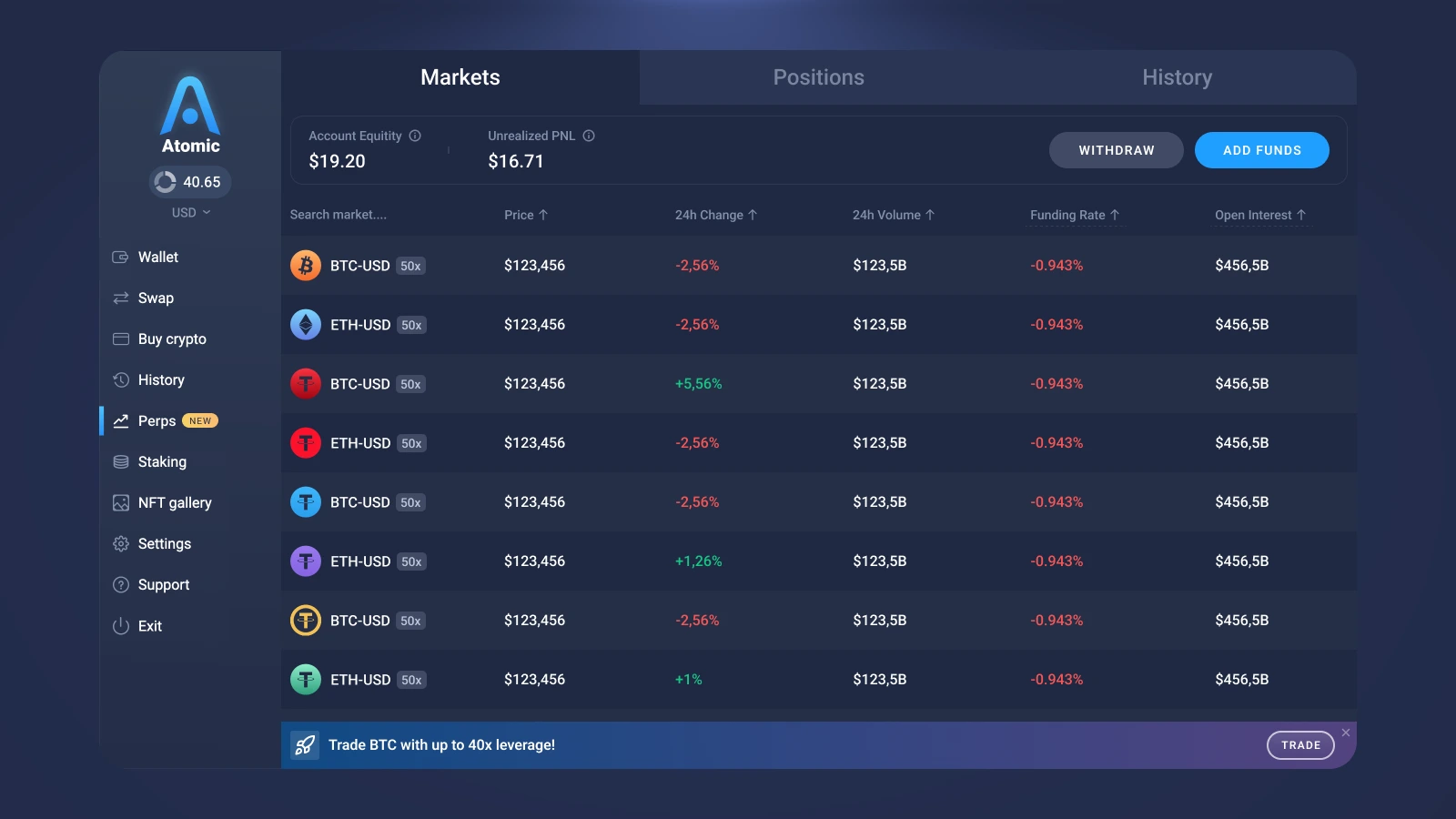
Atomic Wallet allows you to trade TEL perpetual futures directly from a self-custody environment, without depositing funds to a centralized exchange. This setup is designed for traders who want exposure to Telcoin’s volatility while maintaining control over their assets. You can open long or short positions, react quickly to news-driven price movements, and manage risk using perpetual futures — all from a single wallet interface.
Trade Telcoin perpetual futures in Atomic Wallet → Download Atomic Wallet