What Is Wingbits? Inside the Aviation DePIN Project Launching WINGS on Solana
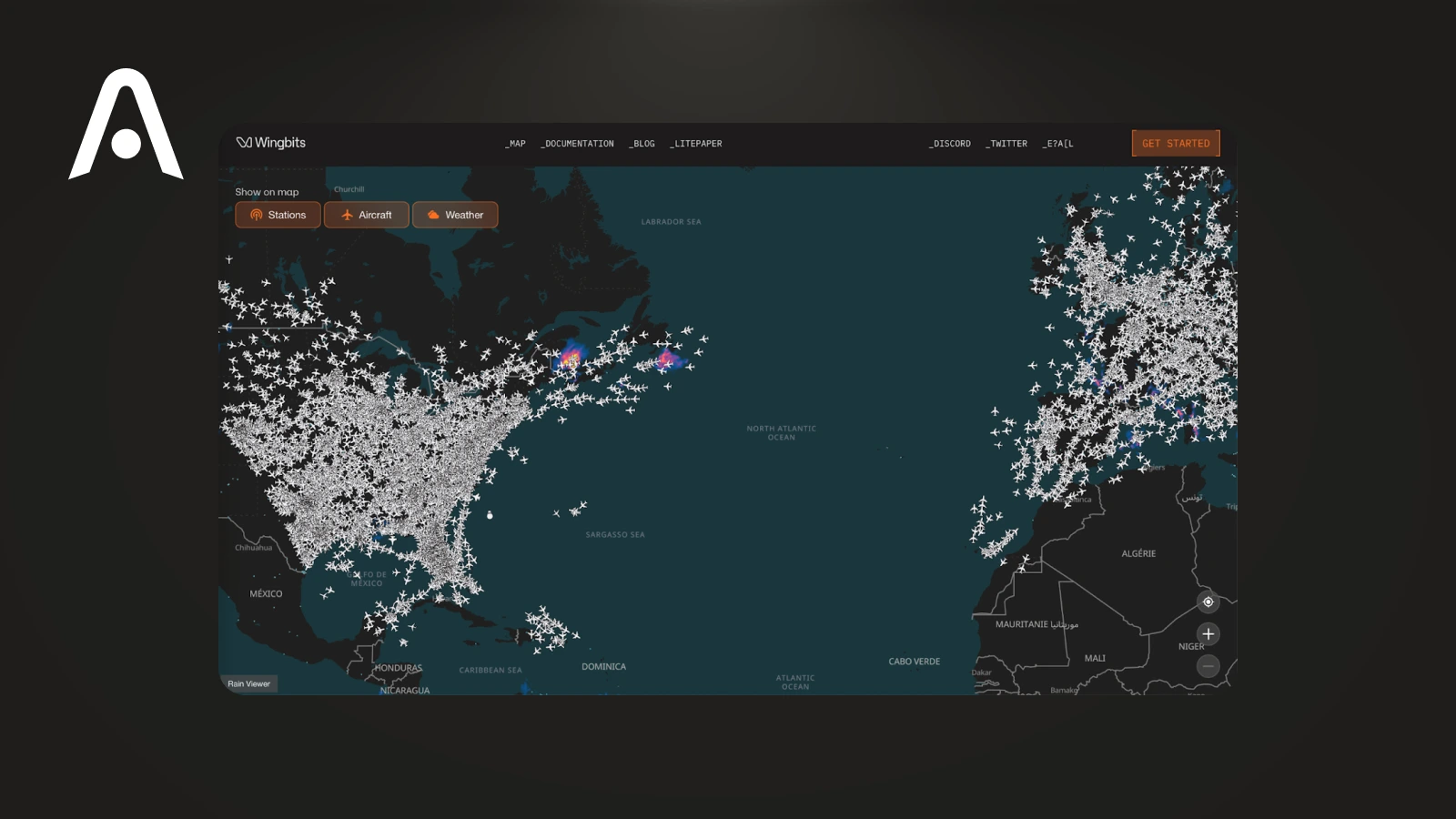
Wingbits is a Solana-based DePIN project building a decentralized flight tracking network powered by real-world aviation data. Instead of relying on centralized infrastructure, the network is made up of individuals who install specialized hardware to capture ADS-B signals broadcast by aircraft in real time.
These contributors—called station operators—send flight data to the Wingbits network, where it is verified, aggregated, and used to create a high-quality global airspace map. In return, they earn WINGS tokens, turning physical infrastructure and data collection into a crypto-native incentive system.
At its core, Wingbits follows a simple loop:
users deploy hardware → collect aviation data → network validates and sells data → contributors earn rewards.
This model positions Wingbits not just as another DePIN experiment, but as a data infrastructure layer for the aviation industry, where real-world utility drives token distribution.
How Wingbits Turns Flight Data Into Crypto Rewards
Unlike traditional mining-based networks, Wingbits does not reward users for raw uptime or hardware presence. Instead, rewards are tied to the quality, uniqueness, and strategic value of the data each station provides.
The network evaluates contributions based on factors like:
- geographic coverage (filling gaps in global airspace)
- signal quality and consistency
- proximity to high-value zones such as airports and flight corridors
This creates a more efficient system where participants are incentivized to improve network coverage rather than simply scale hardware.
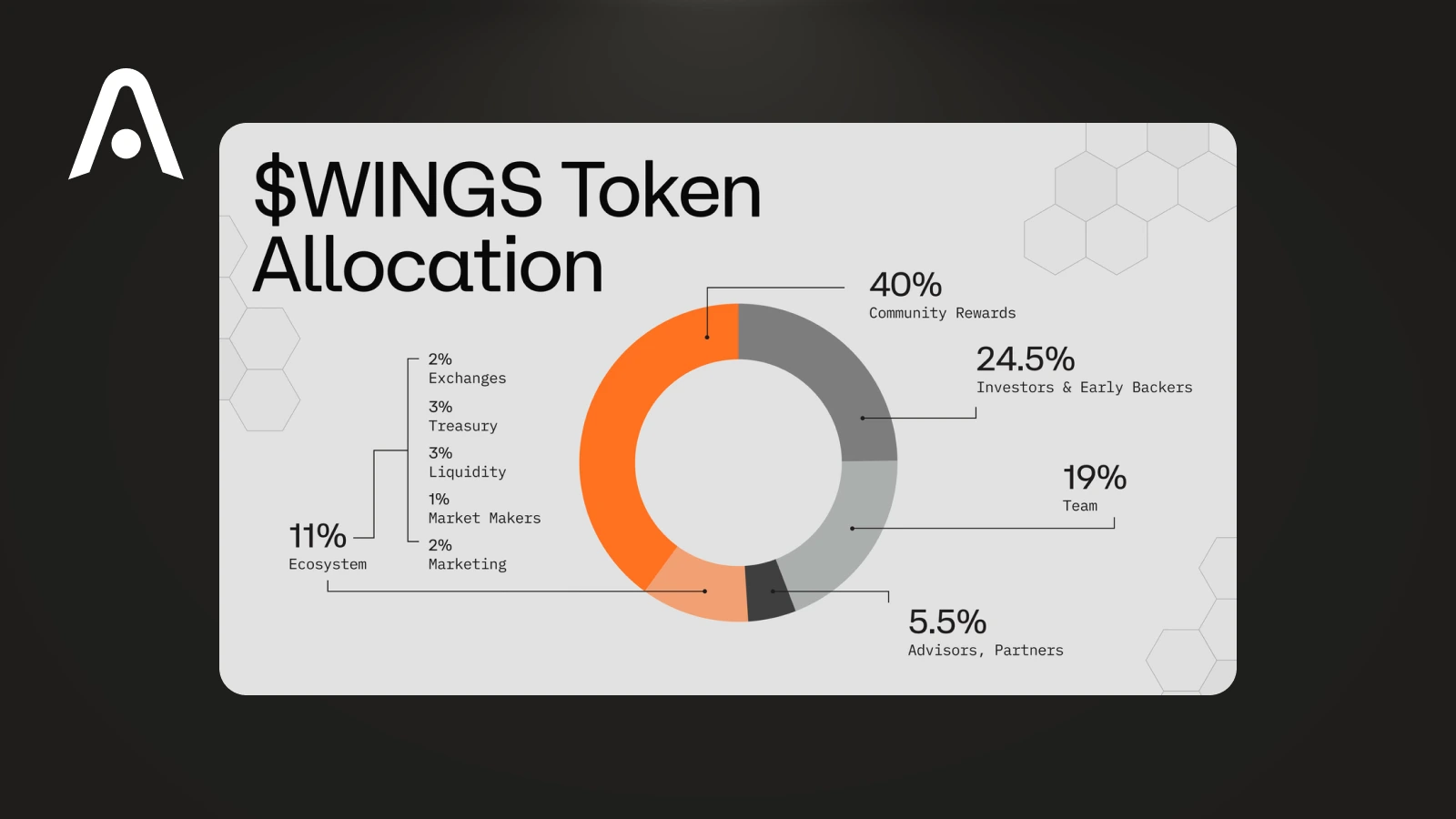
A significant portion of the total supply—40% (4 billion WINGS)—is reserved specifically for these long-term contributor rewards, distributed over time. This aligns incentives toward sustained network growth rather than short-term extraction.
WINGS Token Explained: Utility, Supply, and Distribution
The WINGS token is the core of the Wingbits network, used to reward contributors, support ecosystem growth, and connect real-world aviation data with on-chain value. The total supply is fixed at 10 billion tokens, with a distribution designed to prioritize long-term network expansion rather than short-term liquidity:
- 40% — Daily Station Rewards (4B tokens for contributors over time)
- 11% — Ecosystem (liquidity, exchanges, treasury, marketing)
- 24.5% — Investors & Early Backers
- 19% — Team
- 5.5% — Advisors, Consultants, Partnerships
What stands out is the scale of the rewards allocation. With 40% of supply reserved for contributors and distributed over years, Wingbits is structured to incentivize sustained participation and data quality, not rapid token extraction.
Beyond distribution, the token is tied to the network’s economic loop. Wingbits monetizes aviation data and allocates part of that revenue toward buyback and burn mechanisms, linking token value to real usage rather than pure speculation.
Wingbits TGE: What to Know Before Launch
The WINGS token launch follows a structured multi-phase rollout designed to bootstrap liquidity, align incentives, and transition the network from testnet rewards to open market trading.
Why Wingbits Stands Out in the DePIN Space
Most DePIN projects focus on hardware deployment. Wingbits focuses on data that already has real buyers.
The key difference is demand. Flight tracking data is actively used by:
- airlines optimizing routes and fuel usage
- air traffic control systems
- logistics and supply chain platforms
- emergency and government services
This gives Wingbits a clearer path to monetization compared to networks that are still searching for product-market fit.
Another differentiator is the incentive design. With:
- 40% of supply allocated to rewards
- no major unlocks at TGE for team and investors
- long-term emission schedule (up to 20 years)
the project is structured for gradual growth rather than short-term hype cycles.
On top of that, Wingbits already shows early traction with thousands of active stations and global coverage, positioning it closer to a functional data network than a concept-stage DePIN.
Real-World Use Cases of Wingbits Data
Wingbits is not limited to crypto-native use cases. Its core product—real-time and historical flight data—has applications across multiple industries:
- Aviation companies: Optimize routes, reduce fuel costs, and improve scheduling accuracy
- Air traffic control organizations: Monitor airspace and manage traffic flow more efficiently
- Emergency services: Track aircraft in distress and coordinate response operations
- Logistics and supply chains: Monitor air cargo and improve delivery visibility
- Travel platforms: Provide real-time flight updates to users
- Government agencies: Maintain secure and transparent airspace monitoring
- Drone and UAV operators: Navigate regulated airspace with better situational awareness
This breadth of use cases reinforces a core point: Wingbits is building a data infrastructure layer, where token incentives are backed by actual industry demand rather than purely internal ecosystem activity.
Risks and Things to Consider
Despite a strong narrative, Wingbits remains an early-stage project with several factors to evaluate before engaging with the WINGS token.
- Hardware dependency: Participation requires specialized equipment, which creates a barrier to entry and may slow network expansion in certain regions
- Competition with established players: Centralized platforms like flight tracking services already dominate the market, meaning Wingbits must prove data quality and reliability at scale
- Post-TGE market dynamics: Even with limited initial unlocks, early volatility is expected as liquidity forms and price discovery begins
- Revenue execution risk: The long-term model depends on successfully selling aviation data and sustaining demand from enterprise users
- Network density challenges: Rewards depend on coverage quality, so overcrowded areas may see diminishing returns for new participants
These factors do not invalidate the project, but they highlight that Wingbits should be viewed as a developing infrastructure play, not a guaranteed outcome.
Conclusion: Is Wingbits Just Another DePIN Token?
Wingbits brings a different angle to the DePIN space by tying rewards to real aviation data with existing industry demand, rather than purely speculative network growth.
The combination of:
- long-term reward allocation (40% supply)
- limited TGE unlocks
- and a model built around data monetization
positions WINGS as a more structured and utility-driven token compared to many early-stage launches.
At the same time, the project is still in its early phase. Its long-term success will depend on scaling global coverage, maintaining data quality, and converting usage into consistent demand from aviation and logistics players.
For users looking to interact with WINGS after launch—whether to store, manage, or exchange tokens—using a secure non-custodial solution like Atomic Wallet ensures full control over assets within the broader Solana and multi-chain ecosystem.